

Home > News > Industry news > What Frequency Bands Do Most Drones Use?


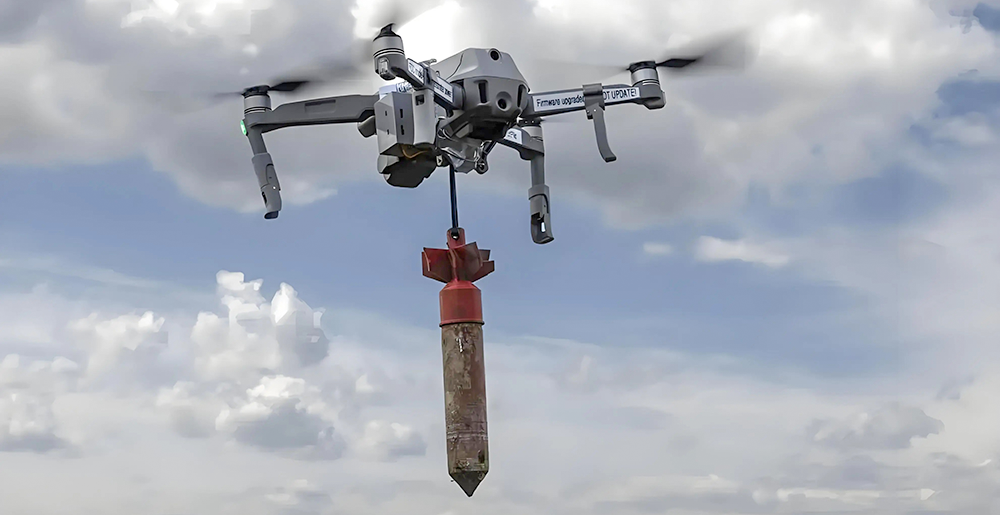
If you are new to the world of drones—whether for photography, racing, or commercial inspection—one of the first technical details you will encounter is radio frequencies. Understanding which frequency bands your drone uses is crucial for maintaining a stable connection, maximizing range, and avoiding interference. In this guide, we will break down the most common frequency bands used by drones today, how they differ, and which one is right for your flying needs.
When looking at consumer and professional drones, two frequency bands dominate the market: 2.4 GHz and 5.8 GHz.
The 2.4 GHz band has been the standard for radio-controlled devices for years. It is the frequency band most drones use for transmission.
Range: Generally offers a longer range compared to 5.8 GHz because lower frequencies travel farther and penetrate obstacles like trees and buildings more effectively.
Interference: Because Wi-Fi, Bluetooth, microwaves, and other consumer electronics also operate at 2.4 GHz, this band is often congested. In urban areas, this can lead to signal dropouts or latency issues.
Use Case: Best for long-range flying, cinematic drones, and scenarios where the drone may fly behind light obstacles.
The 5.8 GHz band is the preferred choice for drone racing and first-person view (FPV) pilots.
Speed & Latency: 5.8 GHz offers higher bandwidth and lower latency, which is essential for FPV goggles where every millisecond counts.
Interference: This band is usually less congested than 2.4 GHz because fewer household devices use it. However, it has a shorter range and struggles to penetrate solid objects.
Use Case: Ideal for FPV racing, freestyle drones, and situations where video clarity and response time are prioritized over long-distance range.
For industrial applications or long-range hobbyist drones (often referred to as “Long Range” or LR), frequencies like 900 MHz (in the US) and 1.4 GHz are utilized.
These bands are not typically found on standard consumer drones like DJI Mavics or Autel EVOs without additional hardware modifications (such as Crossfire or DragonLink systems). They provide exceptional penetration and range, often allowing pilots to fly several kilometers away without losing signal. However, they require specific radio controllers and receivers, and regulations regarding these bands vary strictly by country.
Modern drones rarely rely on a single static frequency. Most high-end drones now utilize Dual-Band technology or Automatic Frequency Hopping.
Dual-Band: Drones like the DJI Mini 4 Pro or Air 3 automatically switch between 2.4 GHz and 5.8 GHz. The system analyzes the environment in real-time. If the 2.4 GHz band becomes too noisy, the drone hops to 5.8 GHz, and vice versa.
FHSS (Frequency Hopping Spread Spectrum): This technology jumps between hundreds of frequencies within a band thousands of times per second. It ensures that even if one channel is jammed or interfered with, the connection remains intact.
The newest trend in drone technology is the integration of 4G LTE and 5G dongles or eSIMs. When a drone flies beyond the line of sight or behind large structures where traditional radio waves fail, the drone can switch to a cellular network.
This does not replace the 2.4 GHz or 5.8 GHz control link but acts as a backup bridge. It allows for “unlimited” range as long as there is cellular coverage, which is becoming a standard feature for enterprise drones used in inspection and search-and-rescue operations.
| Frequency Band | Common Use | Range | Pros | Cons |
|---|---|---|---|---|
| 2.4 GHz | Control & Video | Long | Good penetration, long range | High interference in cities |
| 5.8 GHz | FPV Video | Medium | Low latency, clearer signal | Poor obstacle penetration |
| 900 MHz | Long-Range Control | Very Long | Excellent penetration | Large antennas, regional legality |
| 4G/5G | Hybrid Control | Unlimited | No distance limit | Requires SIM card, latency |
So, what frequency bands do most drones use? The standard answer is 2.4 GHz for control and 5.8 GHz for video, though modern hybrid systems are rapidly changing the landscape. When choosing a drone or radio system, consider your environment. If you fly in dense cities, a dual-band system that utilizes 5.8 GHz will help cut through the Wi-Fi noise. If you fly in rural areas or need long range, sticking to 2.4 GHz or investing in a 900 MHz backup system is the way to go.
Always remember to check your local regulations regarding radio frequencies and drone operations, as using unauthorized frequencies can result in fines or legal penalties.
86-13920737097
AddNo. 15, Rongyuan Road, Huayuan Industrial Park, Binhai Hi-tech Zone, Tianjin, China.
E-mailjackyjingtj@gmail.com
Copyright @ 2026 BNT PTE. LTD. No:84463
Copyright @ 2026 BNT PTE. LTD.
Copyright @ 2026BNT PTE. LTD.


