

Home > News > Industry news > The Role of Drone Jammer Modules in Counter-UAS Systems


As drone technology continues to evolve, so do the threats associated with unauthorized UAV activities. From critical infrastructure protection to public event security, counter-UAS systems have become essential. At the core of many of these systems are drone jammer modules, which play a vital role in neutralizing airborne threats.
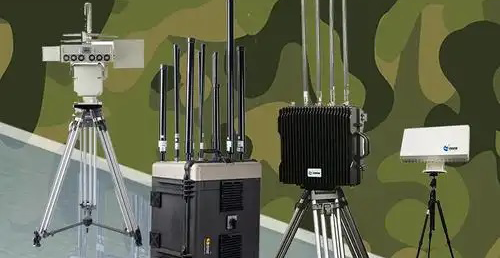
Drone jammer modules are specialized radio frequency (RF) devices designed to interfere with communication links between a drone and its operator. These modules target key frequency bands used for:
By disrupting these signals, jammer modules can force drones to hover, return to home, or land safely.
Drone jammer modules operate by transmitting high-power RF signals on the same frequencies used by UAVs. This creates interference that overwhelms the drone’s communication system.
Typical operational mechanisms include:
The effectiveness of these techniques depends on output power, antenna design, and environmental conditions.
Drone jammer modules are often integrated into broader counter-UAS architectures. Their roles include:
They prevent drones from receiving commands from their operators, effectively cutting off control.
By interfering with GNSS signals, drones lose positioning accuracy, limiting autonomous flight.
Jammer modules enable rapid response to detected threats, reducing the risk of intrusion or damage.
Modern modules can operate across multiple frequency bands simultaneously, increasing effectiveness against diverse UAV types.
Jammer modules can be integrated into handheld devices, vehicle-mounted systems, or fixed installations.
They are available in various power outputs, from low-power portable units to high-power stationary systems.
Once a drone is detected, jammer modules can immediately disrupt its operation.
Advanced modules, especially those based on SDR (Software Defined Radio), can adapt to new drone technologies through software updates.
While highly effective, drone jammer modules also present certain challenges:
Careful system design and compliance with local regulations are essential.
Drone jammer modules are widely used across multiple sectors:
Their versatility makes them a cornerstone of modern drone defense strategies.
The future of drone jammer modules is shaped by rapid technological advancements:
These innovations will further strengthen the role of jammer modules in counter-UAS ecosystems.
Drone jammer modules are a critical component of counter-UAS systems, providing the ability to disrupt and neutralize unauthorized drones effectively. By targeting communication and navigation signals, these modules ensure rapid and reliable threat mitigation.
As drone threats continue to grow, the importance of advanced, adaptable, and compliant jamming solutions will only increase, making them indispensable in modern airspace security.
86-13920737097
AddNo. 15, Rongyuan Road, Huayuan Industrial Park, Binhai Hi-tech Zone, Tianjin, China.
E-mailjackyjingtj@gmail.com
Copyright @ 2026 BNT PTE. LTD. No:84463
Copyright @ 2026 BNT PTE. LTD.
Copyright @ 2026BNT PTE. LTD.


