

Home > News > Industry news > How Drone Jammer Modules Block Control Signals: A Technical Guide


In recent years, the rapid proliferation of consumer and commercial drones has raised significant concerns regarding privacy, security, and airspace safety. Unauthorized drones flying over critical infrastructure, private properties, or restricted events have become a common challenge. To counter this threat, many security teams rely on drone jammer modules. But how exactly do these devices work?
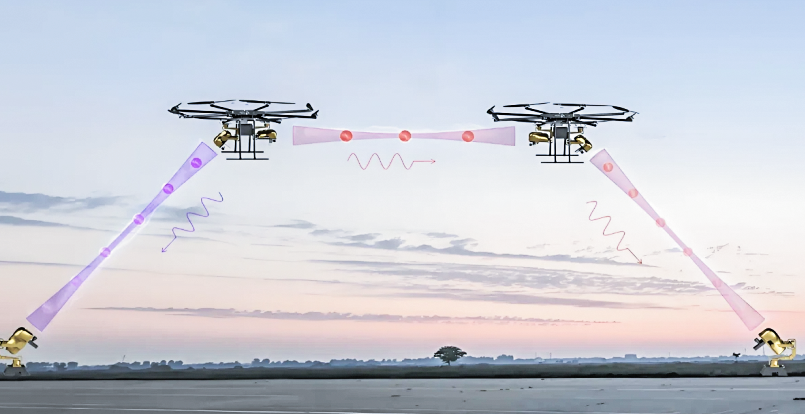
Understanding the mechanics behind drone jamming requires a basic grasp of radio frequency (RF) communication. This article explores the technical principles, the types of signals targeted, and the practical limitations of using jammer modules to neutralize rogue UAVs (Unmanned Aerial Vehicles).
At its core, a drone jammer module operates on a simple principle: overpowering the communication link. Drones rely on specific radio frequencies to receive commands from their operators. Typically, these frequencies are the 2.4GHz band and the 5.8GHz band—the same spectrum used by Wi-Fi routers and other consumer electronics.
When a jammer is activated, it emits a high-power, concentrated burst of “noise” or electromagnetic energy across these specific frequencies. By flooding the environment with this noise, the jammer raises the noise floor to a point where the drone’s receiver can no longer distinguish the operator’s signal from the background interference. As a result, the control link is severed.
Most commercial drones utilize two distinct radio links:
The Control Link (2.4GHz): Used to transmit commands such as throttle, yaw, pitch, and roll from the remote controller to the drone.
The Video Link (5.8GHz): Used to transmit first-person view (FPV) video feedback from the drone back to the ground station.
High-end drone jammer modules are designed to target both frequencies simultaneously. By disrupting the 2.4GHz control signal, the drone loses its ability to receive instructions. Depending on the manufacturer’s pre-programmed “fail-safe” protocols, the drone will typically react in one of three ways:
Return to Home (RTH): The drone automatically flies back to its takeoff point.
Landing: The drone initiates an immediate descent regardless of its location.
Hovering: The drone remains stationary until the battery dies, which often leads to a crash or forced landing.
If the 5.8GHz video link is jammed, the operator loses situational awareness. While this does not immediately disable the drone, it effectively blinds the pilot, often prompting them to abort the mission.
Not all jammers are created equal. The effectiveness of a module depends on its architecture:
Instead of simply broadcasting noise, sophisticated modules use protocol-aware techniques. They analyze the communication protocol (such as DJI’s OcuSync or Lightbridge) and inject false packets into the link. This can cause the drone to misinterpret commands or forcibly disconnect the legitimate controller.
While technically distinct from jamming, spoofing is often integrated into advanced modules. Rather than blocking signals, a spoofing module broadcasts fake GPS satellite signals. This tricks the drone’s navigation system into believing it is somewhere else, allowing the operator to override the drone’s flight path.
Omnidirectional modules emit signals in a 360-degree radius. These are effective for protecting a fixed perimeter, such as a stadium or prison, but they cause significant collateral interference to other Wi-Fi devices in the area.
Directional modules use high-gain antennas to focus the jamming energy into a narrow beam. This allows operators to target a specific drone at a long range without disrupting surrounding civilian electronics.
A typical drone jammer module consists of several key components:
Voltage-Controlled Oscillators (VCOs): Generate the specific frequency needed to interfere with the drone’s communication.
Power Amplifiers (PAs): Boost the signal strength. Higher wattage generally equates to greater effective range, though regulatory limits often restrict maximum output power.
Antenna Arrays: Designed to match the polarization and frequency of the target drone. Circular polarized antennas are commonly used to maintain connectivity regardless of the drone’s orientation.
Battery Management System (BMS): Jamming requires significant power. Most portable modules rely on high-discharge lithium-polymer (LiPo) batteries to sustain operation.
While this article focuses on the technical aspects of how drone jammer modules block control signals, it is crucial to acknowledge the legal landscape. In many countries, including the United States, the use of jammers is strictly prohibited by agencies like the FCC (Federal Communications Commission). It is illegal for civilians or private organizations to operate these devices because they interfere with licensed radio communications.
Only authorized government entities, such as the Department of Defense or Homeland Security, are typically permitted to deploy active jamming technology in the field. Before considering the purchase or operation of such a module, one must consult local laws and regulations to avoid severe penalties.
Drone jammer modules represent a high-tech cat-and-mouse game between security forces and drone technology. By emitting targeted electromagnetic interference on the 2.4GHz and 5.8GHz bands, these modules effectively sever the tether between a pilot and their drone, forcing the UAV into a fail-safe mode.
As drone technology evolves—incorporating AI-driven autonomy and encrypted frequency hopping—the jamming industry must also adapt. Understanding the underlying science of signal blocking is essential for anyone involved in physical security, counter-UAS operations, or RF engineering.
86-13920737097
AddNo. 15, Rongyuan Road, Huayuan Industrial Park, Binhai Hi-tech Zone, Tianjin, China.
E-mailjackyjingtj@gmail.com
Copyright @ 2026 BNT PTE. LTD. No:84463
Copyright @ 2026 BNT PTE. LTD.
Copyright @ 2026BNT PTE. LTD.


