

Home > News > Industry news > Customization Options for Professional Drone Jamming Modules: Tailoring Counter-UAS Solutions


In the rapidly evolving landscape of Counter-Unmanned Aerial Systems (C-UAS), a “one-size-fits-all” approach rarely meets the diverse operational demands of modern security environments. As drone threats become more sophisticated, the need for highly specialized countermeasures grows. This is where customization options for professional drone jamming modules become critical.
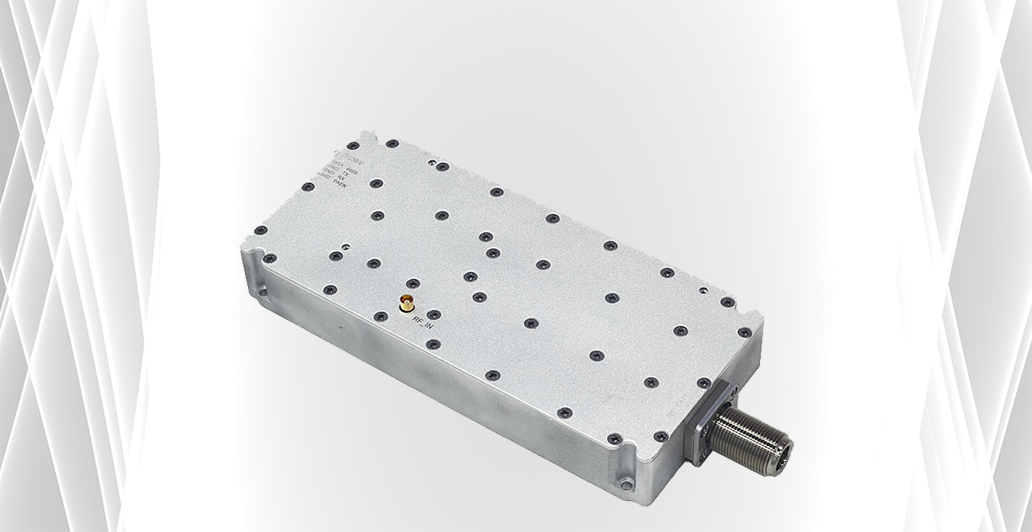
Whether you are securing a national border, a high-profile public event, or a critical infrastructure site, tailoring your jamming equipment to the specific threat matrix ensures both efficacy and operational efficiency. Below, we explore the primary avenues for customization available to industry professionals and system integrators.
The most fundamental aspect of any jamming module is the frequency spectrum it targets. Commercial drones typically operate on ISM bands such as 2.4GHz and 5.8GHz for control and video transmission. However, high-end or military-grade drones may utilize 433MHz, 900MHz, or even 1.4GHz bands for long-range control or GNSS navigation (GPS, GLONASS, BeiDou).
Customization options include:
Selective Band Modules: Instead of a full-spectrum jammer, clients can opt for modules that target only the frequencies used by hostile drones in their specific region, reducing unnecessary collateral interference.
Multi-band Integration: For high-security zones, custom modules can integrate 4 to 6 frequency bands into a single housing, ensuring coverage against all known consumer and industrial drone protocols.
Future-proofing: Modular designs allow for the swapping of RF (Radio Frequency) boards, enabling systems to adapt to new drone communication protocols without replacing the entire unit.
Operational range is a balancing act between power consumption, thermal management, and legal compliance. Professional modules offer variable power output configurations to suit different scenarios.
Portable (Handheld) Modules: Customized for low-to-medium power (10W to 100W per band), these prioritize battery efficiency and lightweight ergonomics for mobile units.
Fixed/Stationary Modules: For perimeter defense, modules can be configured for high-power output (exceeding 100W per band) to achieve a denial zone of several kilometers.
Adjustable Attenuation: OEM customization often includes software-defined power control, allowing operators to dynamically adjust output strength based on the distance of the threat, minimizing signal bleed-over into non-target areas.
A drone jammer module destined for a desert military outpost requires vastly different physical specifications than one designed for a compact drone detection drone or a vehicle-mounted system.
OEM Board-Level Modules: For integrators (such as robotics companies or security vehicle manufacturers), customization often begins at the PCB level. We offer low-profile, lightweight RF boards that can be embedded into existing platforms without adding significant weight or bulk.
IP Ratings: Custom enclosures can be specified to meet IP65, IP66, or military-grade (MIL-STD-810) standards, ensuring operation in extreme temperatures, rain, dust, and salt spray environments.
Rack-Mount vs. Portable: Clients can choose between ruggedized portable cases for rapid deployment or standard 19-inch rack-mount chassis for centralized security control rooms.
High-power RF amplification generates significant heat. Without proper cooling, a module will experience thermal throttling, drastically reducing its effective range and lifespan.
Customization in this area includes:
Passive Cooling: Utilizing heavy-duty aluminum heat sinks for low-power modules or operations in cooler climates.
Active Forced Air: Integration of high-MTBF (Mean Time Between Failures) fans for continuous operation in standard conditions.
Liquid Cooling: For high-power, continuous-duty applications (such as 24/7 airspace denial), custom liquid cooling loops can be integrated to maintain optimal operating temperatures without acoustic or thermal signature spikes.
Modern drone jamming modules are rarely standalone units; they are components of a larger C-UAS ecosystem that includes detection radars, RF sensors, and electro-optical cameras.
Custom software development allows for:
API Integration: Custom RESTful APIs or SDKs enable seamless communication between the jamming module and third-party command-and-control (C2) systems. When a radar detects a threat, the jamming module can be triggered automatically.
Slew-to-Cue Capability: Integration with PTZ (Pan-Tilt-Zoom) cameras can be customized so that the jamming module’s activation direction aligns with the camera’s view, allowing operators to verify the target before engaging.
Selective Jamming Triggers: Custom firmware can be written to allow for “jam-on-the-fly” protocols, where the system only activates when a specific drone ID or frequency hop pattern is detected, rather than broadcasting constantly.
The power architecture of a jamming module dictates its deployment versatility. Customization options here include:
Hot-Swap Battery Systems: For handheld or man-pack units, custom battery sleds allow for rapid battery changes without downtime.
AC/DC Converters: For fixed installations, modules can be customized to accept standard mains power (110V-240V) with internal surge protection.
Vehicle Integration: 12V/24V DC input optimization for military vehicles, marine vessels, or UAV ground control stations.
Investing in customized drone jamming modules ensures that security personnel are not fighting the next-generation drone threat with outdated or ill-fitting equipment. By tailoring frequency coverage, power output, physical form factors, and software integration, organizations can build a C-UAS architecture that is not only effective but also efficient and scalable.
Whether you are an OEM looking to integrate counter-drone capabilities into your existing product line or a security agency seeking a bespoke solution for a high-value asset, understanding these customization parameters is the first step toward airspace dominance.
If you require a technical consultation on frequency selection or hardware integration for your specific operational environment, contact our engineering team to discuss your project requirements.
86-13920737097
AddNo. 15, Rongyuan Road, Huayuan Industrial Park, Binhai Hi-tech Zone, Tianjin, China.
E-mailjackyjingtj@gmail.com
Copyright @ 2026 BNT PTE. LTD. No:84463
Copyright @ 2026 BNT PTE. LTD.
Copyright @ 2026BNT PTE. LTD.


