

Home > News > Industry news > 100W vs 200W Drone Jammer Modules: A Comprehensive Power Comparison for C-UAS Applications


When designing or selecting a counter-drone system, one of the most critical decisions is the power output of the jamming modules. Two of the most common power ratings in the industry are 100W and 200W. But does higher wattage always mean better performance? The answer, as with most engineering decisions, is: it depends.
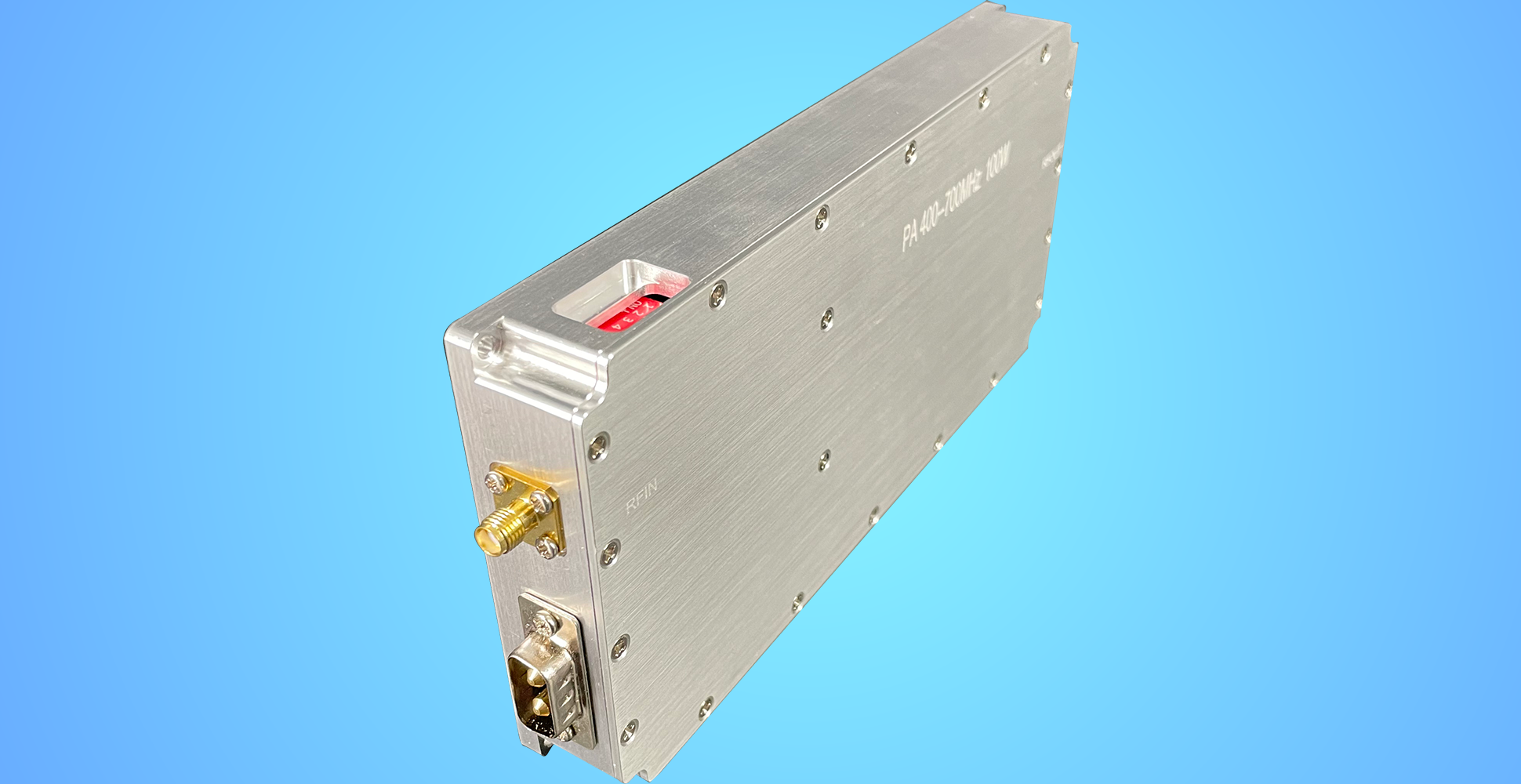
This comprehensive guide compares 100W and 200W drone jammer modules, examining their technical differences, practical applications, and the trade-offs involved in choosing one over the other. Whether you are a system integrator, security professional, or procurement specialist, understanding these differences is essential for deploying an effective and efficient anti-drone solution.
Before diving into the comparison, it is important to understand what “100W” and “200W” actually mean in the context of RF jamming.
Conducted Power: This refers to the power generated by the amplifier inside the module, measured at its output port.
Effective Radiated Power (ERP): This is the power that actually leaves the antenna and travels through the air. It depends on both the module’s output and the antenna’s gain.
The relationship between power and jamming effect is logarithmic, not linear. Due to the inverse-square law of signal propagation, doubling the power (from 100W to 200W) does not double the jamming range. In free space, to double the range, you would need approximately four times the power. A 200W module might only achieve about 40% more range than a 100W module, depending on environmental conditions.
| Factor | 100W Module | 200W Module |
|---|---|---|
| Typical Range | 1-3 km (line of sight) | 1.5-5 km (line of sight) |
| Obstacle Penetration | Good | Better |
| Urban Performance | Effective for most scenarios | Superior in dense RF environments |
100W modules are sufficient for most perimeter protection applications, such as prisons, small airports, and critical infrastructure sites. They provide reliable jamming at distances up to several kilometers under ideal conditions.
200W modules excel in challenging environments where signals must penetrate obstacles or overcome high ambient RF noise. They are preferred for large-scale border protection, major international airports, and military installations where maximum range is non-negotiable.
This is where the power difference becomes most critical operationally.
100W Modules: Generate less heat, making them easier to cool. They can often operate continuously (100% duty cycle) with passive cooling or modest fans. This makes them ideal for fixed installations where reliability and silence are valued.
200W Modules: Generate significantly more heat. They almost always require advanced thermal management, including large heat sinks, high-performance fans, or even liquid cooling in some cases. The duty cycle may need to be managed (e.g., 50% duty cycle means jamming for 5 minutes, resting for 5 minutes) to prevent overheating, unless the system is engineered for continuous operation with robust cooling.
As highlighted in BNTJammer’s product philosophy, regardless of power level, modules must be designed for “stable continuous operation.” A 200W module with poor thermal design will underperform a well-cooled 100W module in real-world scenarios.
| Aspect | 100W Module | 200W Module |
|---|---|---|
| Input Power Required | ~200-250W | ~400-500W |
| Battery Life (Portable) | Longer | Shorter |
| Power Supply Size | Smaller, simpler | Larger, more complex |
For portable or handheld jammers, 100W is often the practical upper limit. Higher power would require heavier batteries and generate too much heat for a handheld form factor. For vehicle-mounted systems, 200W is feasible with the vehicle’s alternator providing continuous power. For fixed installations, both are viable, but 200W requires heavier-duty electrical infrastructure.
Both 100W and 200W modules can be designed to cover the full range of drone frequencies (400MHz to 6GHz). However, there is a trade-off:
Wideband vs. Band-Specific: A single 200W module covering 2.4GHz and 5.8GHz might be less efficient than two dedicated 100W modules, each optimized for a single band. The choice depends on whether you need simultaneous jamming of multiple frequencies or maximum power on a single threat frequency.
Perimeter Security for Facilities: Prisons, data centers, corporate campuses, and stadiums typically require ranges of 1-2km, which 100W handles effectively.
Portable and Man-Packable Systems: Weight and battery life are critical. 100W offers the best balance of power and portability.
Cost-Sensitive Projects: 100W modules generally have lower component costs and simpler cooling requirements, reducing overall system cost.
Urban Environments with Short Engagement Ranges: In dense cities, drone threats often appear at close range, making extreme power unnecessary.
Border and Coastline Security: Protecting long perimeters against drones that may approach from kilometers away.
Major Airports: Runway approaches require jamming signals that can reach aircraft approach paths while overcoming ground clutter.
Military Forward Operating Bases: When you need maximum assurance against drone threats, and power/cooling constraints are secondary.
High-Interference Environments: Locations with strong ambient RF signals (near broadcast towers, industrial sites) require extra power to drown out the noise.
It is crucial to understand the law of diminishing returns in RF power. Increasing from 10W to 100W (a 10x increase) provides a dramatic improvement in range. Increasing from 100W to 200W (a 2x increase) provides a modest improvement. The jump from 200W to 400W would provide an even smaller incremental gain.
Therefore, the decision between 100W and 200W should be based on:
Required Range: Calculate the actual distance you need to cover.
Environmental Challenges: Assess obstacles and RF noise levels.
Platform Constraints: Consider available power, space, and cooling.
Budget: Allocate resources where they provide the most value.
As a leading manufacturer of drone jammer modules, BNTJammer offers both 100W and 200W options across its product line, with output power ranging from 10W to 200W. This flexibility allows integrators to choose the right tool for the job.
BNTJammer’s use of advanced GaN technology ensures that even 200W modules maintain high efficiency, reducing the thermal burden. Their modular design philosophy means that whether you need 100W or 200W, the integration experience remains consistent, with standardized interfaces and mechanical footprints where possible.
In the 100W vs 200W debate, there is no universal winner. The right choice depends entirely on your specific operational requirements.
Choose 100W for balanced performance, easier integration, and applications where portability or continuous operation is key.
Choose 200W for maximum range, challenging environments, and missions where power constraints are secondary to jamming assurance.
By understanding the technical trade-offs and matching the power level to the threat environment, security professionals can deploy counter-drone systems that are both effective and efficient. Reputable manufacturers like BNTJammer provide both options, ensuring that the final decision rests on operational needs rather than technical limitations.
86-13920737097
AddNo. 15, Rongyuan Road, Huayuan Industrial Park, Binhai Hi-tech Zone, Tianjin, China.
E-mailjackyjingtj@gmail.com
Copyright @ 2026 BNT PTE. LTD. No:84463
Copyright @ 2026 BNT PTE. LTD.
Copyright @ 2026BNT PTE. LTD.


