

Home > News > Industry news > Will a Drone Jammer Module Interfere with Other Electronic Devices?


In an era where unauthorized drones pose risks to privacy, airport security, and public events, drone jammer modules (also known as drone jammers or counter-UAS devices) have become essential tools for security forces . However, a critical question persists for operators, regulators, and the general public: Will using a drone jammer module interfere with other electronic devices?
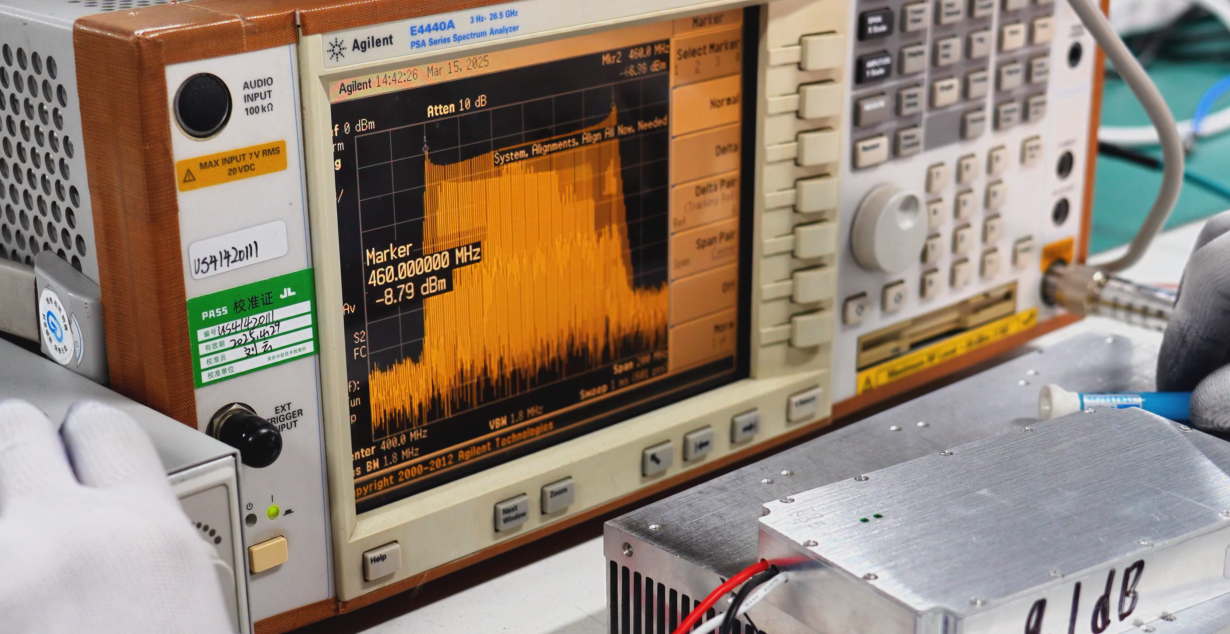
The short answer is yes, it can. Due to the fundamental physics of radio waves, drone jammers pose a significant risk of collateral interference with surrounding electronic systems . This article explores the technical reasons behind this interference, which devices are most at risk, and the measures that can be taken to mitigate these effects.
To understand why interference happens, we must first understand how jammers operate. Drone jammers are designed to disrupt the communication links between a drone and its operator. They function by emitting high-power electromagnetic “noise” on the same radio frequencies that drones use to fly and transmit video .
Most consumer and commercial drones operate on specific, unlicensed frequency bands:
2.4 GHz & 5.8 GHz: Used for remote control commands (Wi-Fi-based) and video transmission (Figure of Merit) .
1.5 GHz (L1) & 1.6 GHz (L2): Used for GPS, GLONASS, and BeiDou satellite navigation signals .
A jammer module floods these frequencies with interference, effectively “shouting” over the legitimate signals to drown them out .
The primary reason jammers affect other electronics is frequency overlap. The radio frequency spectrum is a finite resource. When a jammer blasts energy on a specific band, it doesn’t just affect the target drone; it affects everything within range that relies on that same band .
Depending on the type of jammer (narrowband vs. wideband) and its power output, the following devices can be affected:
| Device Category | Specific Devices | Reason for Interference |
|---|---|---|
| Wi-Fi & Bluetooth | Routers, smart home devices, wireless headphones, IoT sensors | Operate on the same 2.4 GHz and 5.8 GHz public frequencies . |
| Satellite Navigation | Car GPS, smartphone maps, surveying equipment, fleet trackers | Jamming of GPS (L1/L2) and 北斗 frequencies disrupts positioning for everyone in the area . |
| Mobile Networks | Smartphones (calls/data), 4G/5G base stations | Frequency overlap with cellular bands (e.g., 700MHz, 1.8GHz, 2.6GHz) can cause dropped calls or data loss . |
| Aviation & Emergency Services | Aircraft transponders, air traffic control, police/fire radios | High-power jammers can leak into adjacent safety-critical bands, posing a severe public safety risk . |
| Critical Infrastructure | Medical telemetry, utility grid communications | Uncontrolled jamming can disrupt systems where reliability is a matter of life and death . |
A real-world example of how powerful radio signals disrupt nearby electronics is highlighted in a recent Skydio safety bulletin. It warned that a two-way radio transmitting at just 5 Watts—the same technology used in drone jammers—held within a foot of a drone controller could cause video degradation, link loss, or even power failure . If a 5W radio can cripple a controller, a specialized jammer pushing 50W or more can easily disrupt sensitive electronics in the immediate vicinity .
Not all jammers are created equal, and the level of “collateral” interference depends on several technical and operational factors .
Wideband / Barrage Jammers: These emit noise across a huge spectrum (e.g., 20MHz to 6000MHz) to cover all possible drone frequencies. They cause the most severe collateral damage, effectively acting as an “electromagnetic bomb” for nearby consumer electronics .
Narrowband / Spot Jammers: These target specific frequencies (e.g., only 2.4GHz) with precision. They pose a moderate risk, still affecting devices on that exact band (like Wi-Fi), but leaving others (like GPS) untouched .
Directed vs. Omnidirectional: Jammers with directional antennas focus the energy in a beam (like a flashlight), significantly reducing interference behind and beside the operator. Omnidirectional antennas blast energy in all directions, maximizing collateral damage .
A high-power jammer (50W+) has a larger “kill radius” for both drones and legitimate electronics. Furthermore, a smartphone held right next to a jammer is far more likely to lose signal than one 100 meters away .
For authorized personnel (such as law enforcement or military) who must use these devices, several strategies exist to balance drone mitigation with protecting the public’s electronic infrastructure .
Conduct an Electromagnetic Survey: Before deploying a jammer in a sensitive area (like a stadium or government building), professionals map the existing RF environment to understand what is at risk .
Use Precision Hardware: Employ jammers that utilize AI-driven spectrum sensing to identify the drone’s specific signal and only fire back on that exact frequency, rather than blasting the entire band .
Employ Directional Antennas: As noted, focusing the signal toward the drone and away from crowds, hospitals, or airports is critical .
Power Control: Using the minimum effective power ensures the drone is taken down without blanketing the entire city in noise .
Explore Non-Interference Alternatives: If the risk to other electronics is too high, operators should consider non-RF methods such as laser systems, physical net capture, or acoustic interference .
Yes, drone jammer modules absolutely can and often do interfere with other electronic devices. This is an unavoidable consequence of the physics of radio waves, as these devices must operate on the same frequencies used by Wi-Fi, GPS, and cellular networks to be effective .
While technology is advancing toward “smarter,” more selective jamming that reduces collateral damage, the risk can never be eliminated entirely . Therefore, the deployment of drone jammers requires a careful balance between security needs and the public’s right to reliable communication infrastructure, guided by strict regulation and professional oversight .
86-13920737097
AddNo. 15, Rongyuan Road, Huayuan Industrial Park, Binhai Hi-tech Zone, Tianjin, China.
E-mailjackyjingtj@gmail.com
Copyright @ 2026 BNT PTE. LTD. No:84463
Copyright @ 2026 BNT PTE. LTD.
Copyright @ 2026BNT PTE. LTD.


