

Home > News > Company dynamics > The New Era of Anti-Drone Signal Jamming: The Core Role of Drone Jamming Modules


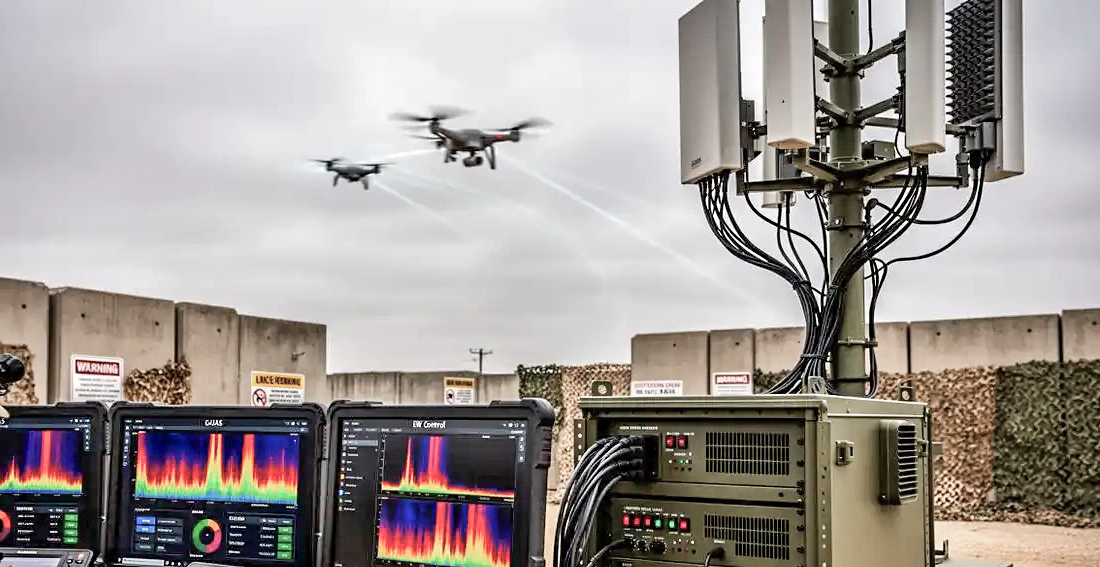
As drone technology continues its rapid expansion across both military and civilian sectors, the potential for malicious use has escalated dramatically. Nations and security organizations now face an unprecedented urgency to deploy reliable counter-drone solutions. Recent demonstrations have validated new technological approaches in anti-drone systems, sparking industry-wide focus on advanced jamming techniques.
Industry Pain Points and Challenges
Modern battlefields and critical infrastructure are confronted with multifaceted threats from unmanned aerial vehicles (UAVs). From illegal surveillance and intelligence gathering to potential offensive operations, drone threats are becoming increasingly complex and unpredictable. Traditional countermeasures, often limited to fixed-frequency or narrowband jamming, struggle against advanced drones equipped with frequency-hopping capabilities, broadband communication links, and swarm tactics. These legacy systems suffer from slow response times, limited coverage, and an inability to keep pace with rapidly evolving drone technologies—making detection and disruption a formidable task.
The Core Solution: Why Signal Jamming is Critical
In building an effective counter-drone system, the signal jamming source plays a pivotal role. By emitting radio frequency (RF) signals at specific frequencies and power levels, it disrupts the drone’s communication links, navigation systems, or remote-control signals, causing the UAV to lose control or abort its mission. To achieve efficient countermeasures, a jamming source must possess wide instantaneous bandwidth and rapid frequency agility. Wide bandwidth ensures comprehensive coverage of the communication spectrum used by drones, while frequency agility enables effective jamming against frequency-hopping or adaptive communication strategies, maintaining dominance in complex electromagnetic environments.
The Solution: 400MHz Instantaneous Bandwidth Signal Generator
Addressing these challenges head-on, the 400MHz instantaneous bandwidth signal generator offers an ideal solution. Designed specifically to counter modern drone threats, it delivers the following core advantages:
Ultra-Wide Frequency Range: Covering 70MHz to 6000MHz, it handles the vast majority of drone communication and navigation bands currently in use.
High Instantaneous Bandwidth: Providing 400MHz of instantaneous bandwidth allows for effective jamming across a wide spectrum in milliseconds—ideal for disrupting broadband and frequency-hopping UAV communications.
Software-Defined Tuning: With software-configurable capabilities, operators can flexibly adjust jamming modes and frequencies based on real-time threats and mission requirements, enabling rapid response and precision targeting.
This drone jamming module, through its advanced performance, serves as a core component in next-generation counter-drone systems, providing robust electronic defense for protecting critical areas and assets.
Conclusion
In the face of increasingly complex drone threats, jamming modules equipped with wide instantaneous bandwidth and software-defined tuning—such as the 400MHz instantaneous bandwidth signal generator—are essential for building efficient and adaptable counter-drone systems. They not only enhance countermeasure effectiveness but also lay a solid foundation for the future of electronic warfare and security defense.
Q&A
Question 1: Why does counter-drone technology require instantaneous bandwidth?
Answer: Instantaneous bandwidth allows a signal generator to simultaneously cover and disrupt a wider frequency range. Modern drones often use broadband communications or rapid frequency hopping. Large instantaneous bandwidth ensures effective suppression of these complex communication patterns, significantly improving jamming success rates.
Question 2: How does software-defined tuning enhance a counter-drone system?
Answer: Software-defined tuning offers exceptional flexibility. Operators can swiftly adjust jamming frequencies and strategies based on real-time detected drone frequencies, communication protocols, and threat types—without changing hardware. This enables counter-drone systems to adapt to evolving threat landscapes, delivering intelligent, precise jamming.
86-13920737097
AddNo. 15, Rongyuan Road, Huayuan Industrial Park, Binhai Hi-tech Zone, Tianjin, China.
E-mailjackyjingtj@gmail.com
Copyright @ 2026 BNT PTE. LTD. No:84463
Copyright @ 2026 BNT PTE. LTD.
Copyright @ 2026BNT PTE. LTD.


