

Home > News > Company dynamics > Countering FPV Racing Drones: The Power of Wideband Jammer Modules


The proliferation of First-Person View (FPV) racing drones has transitioned from a competitive sport to a significant security concern. These agile, low-flying aircraft are no longer just for hobbyists; they are increasingly utilized for covert surveillance, smuggling, and even as weaponized loitering munitions in modern conflicts . Unlike standard consumer drones that often rely on predictable GPS and ISM band signals, FPV drones present a unique challenge due to their use of unconventional frequencies and frequency-hopping spread spectrum (FHSS) technology.
To effectively counter these threats, security forces and critical infrastructure operators are turning to advanced wideband jammer modules. This article explores how these sophisticated systems work to neutralize the FPV threat.
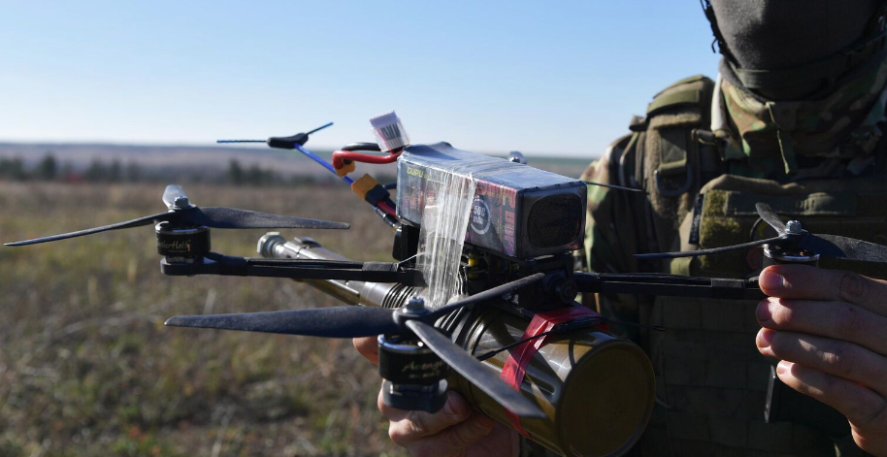
FPV drones are inherently difficult to counter for several reasons. Pilots often operate on the fly, using DIY components that allow them to select non-standard frequency bands to avoid detection and jamming . Traditional jammers, which might barrage jam a specific range (like 2.4 GHz), are ineffective against an FPV drone operating on 780 MHz or 1.3 GHz for video transmission.
Furthermore, modern communication protocols used by these drones employ frequency hopping, where the signal jumps between frequencies in a pattern known only to the transmitter and the receiver. A static jammer cannot keep up, making old-school noise jammers obsolete .
To counter these elusive targets, a wideband jammer module must move beyond brute force. Here are the critical technologies enabling effective FPV drone disruption:
An FPV drone typically requires two links to operate: the control link (usually 2.4 GHz or 900 MHz) and the video downlink (often 1.2 GHz, 2.4 GHz, or 5.8 GHz). High-end wideband jammer modules, such as those seen in systems like ARDRONIS Effect, offer gapless coverage from 400 MHz to 6 GHz . This ensures that whether the drone is using standard ISM bands or modified non-ISM bands for penetration, the jammer has the frequency reach to disrupt it. With output power reaching up to 250W, these systems can generate a “wall of noise” that drowns out the pilot’s signal .
While brute force wideband jamming is effective, it is not always efficient and can cause significant collateral interference to friendly communications. This is where Agile Jamming comes into play.
Modern jammer modules utilize Software-Defined Radio (SDR) architecture to shift from “full firepower coverage” to “precise surgical strikes” . Instead of blasting noise across the entire spectrum, the system first detects the specific signal parameters of the incoming FPV drone—its frequency, bandwidth, and modulation type . Once the threat is analyzed, the jammer generates a targeted waveform to disrupt that specific communication link. This is known as “follower jamming,” which is highly effective against FHSS signals, as it tracks and hops with the drone’s signal to ensure continuous disruption .
FPV threats rarely come alone. Swarm attacks involving multiple drones operating on different frequencies are a growing reality . Wideband jammer modules address this through multiband capability. A single unit can simultaneously jam arbitrary combinations of frequencies, neutralizing a drone flying on 2.4 GHz control while simultaneously taking down a companion drone transmitting video on 5.8 GHz .
Jamming blindly is a strategy of last resort. Effective counter-measures rely on a closed-loop system involving detection and disruption. By integrating detection modules that continuously scan the spectrum, the jammer can remain silent until a genuine threat appears . This “reactive jamming” mode minimizes electromagnetic exposure for friendly forces and nearby civilians.
When the detection module identifies a signal matching known FPV or drone communication patterns, it triggers the jammer. This detection-analysis-suppression cycle happens in milliseconds, ensuring that the drone pilot loses video feed or control the moment they enter a restricted zone .
Wideband jammer modules are versatile enough to protect a variety of assets:
Critical Infrastructure: Protecting power plants, prisons, and airports from surveillance or disruption .
Convoy Protection: Mobile jammers mounted on vehicles can create a protective bubble against IED-dropping or ramming FPV drones .
Event Security: Preventing race disruption or illegal recording at large public gatherings.
The arms race between drone pilots and counter-drone systems is pushing technology toward smarter solutions. The future of wideband jamming lies in AI-driven protocol recognition and cognitive jamming algorithms. As FPV technology evolves, so too must the jammer modules, with software updates allowing the hardware to adapt to new, unforeseen threats without requiring physical modifications .
In conclusion, while FPV racing drones present a daunting and agile threat, the development of high-power, intelligent wideband jammer modules offers a robust line of defense. By combining gapless spectrum coverage with the intelligence to track and disrupt frequency-hopping signals, these systems ensure that no drone—no matter how fast or agile—can penetrate protected airspace.
86-13920737097
AddNo. 15, Rongyuan Road, Huayuan Industrial Park, Binhai Hi-tech Zone, Tianjin, China.
E-mailjackyjingtj@gmail.com
Copyright @ 2026 BNT PTE. LTD. No:84463
Copyright @ 2026 BNT PTE. LTD.
Copyright @ 2026BNT PTE. LTD.


