

Home > News > Industry news > Swarm Drones and the Limits of Traditional Jamming Modules


For decades, electronic warfare relied on a straightforward principle: overwhelm the enemy’s communication link with powerful noise. Traditional jamming modules—broadband, barrage, or spot jammers—were designed to disrupt command-and-control (C2) links of manned aircraft or single UAVs. But the battlefield has shifted. Enter swarm drones: low-cost, highly autonomous, and capable of collaborative decision-making. This article explores why legacy jamming systems are struggling to keep up and what it means for modern defense.
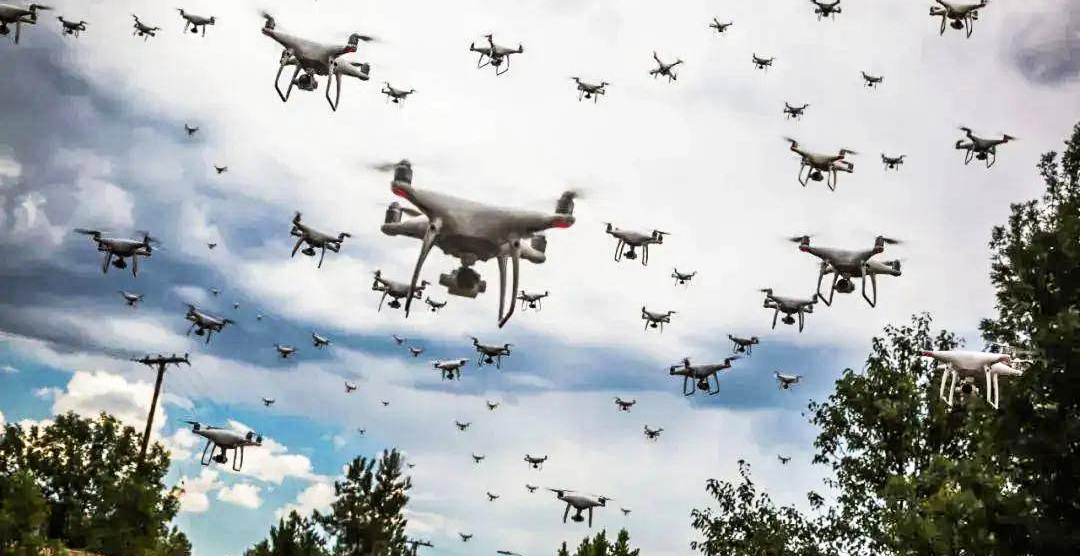
Conventional jamming modules emit radio frequency (RF) energy to block or corrupt signals between a drone and its operator. Techniques include noise jamming (flooding the entire frequency band), deception jamming (sending false commands), and pulse jamming (periodic interference). These methods work reasonably well against a single, remotely piloted drone with predictable frequency patterns. However, their fundamental assumption—that disrupting the communication link disables the target—is crumbling when faced with intelligent swarms.
Swarm drones are not just many drones; they are a distributed system. Each unit shares data via ad-hoc mesh networks, and more importantly, modern swarms operate with onboard AI and edge computing. A swarm can execute pre-programmed tactics (flooding an area, searching for radar emissions) even after losing all external links. This autonomy drastically reduces dependency on vulnerable radio frequencies.
Most military-grade drones already employ frequency hopping (FHSS) to evade simple jammers. Swarms take this further by dynamically reassigning channels across the collective. A fixed jammer cannot block hundreds of rapidly shifting frequencies simultaneously without immense power—and even then, the swarm’s mesh can route around the jammed nodes.
In a swarm, there is no single “master link” to cut. Even if 30% of drones lose communication, the remaining 70% maintain formation using inter-drone coordination (e.g., relative positioning, visual or IR data). Jamming becomes a numbers game, and cheap swarms can afford attrition.
Advanced swarms integrate reinforcement learning to detect jamming patterns and adapt in real time. They might switch to optical communications, emit decoy signals, or physically maneuver to avoid line-of-sight jamming. Traditional jammers are “dumb” transmitters—they cannot learn or outsmart a cognitive adversary.
A single high-power jammer costs millions of dollars and covers a limited radius. Swarm drones can cost as little as $1,000 each. Attackers can launch hundreds of drones, saturating the jammer’s effective range. Meanwhile, the jammer’s heat and power constraints make sustained operation impossible against continuous waves of targets.
Real-world events, such as drone swarm attacks on oil facilities in Saudi Arabia (2019) and ongoing operations in Ukraine, have shown that fielded jamming systems often fail to stop swarms. In one documented test, a standard RF jammer reduced communication for a single drone but had negligible effect on a swarm of 20 autonomous quadcopters using pre-loaded GPS waypoints and vision-based homing. The jammer simply ran out of bandwidth.
Recognizing these limits, defense researchers are pivoting to new approaches:
Conclusion: Traditional jamming modules are not obsolete, but they are no longer a standalone solution against intelligent drone swarms. The era of “one jammer, one kill” is over. Future electronic warfare must embrace distributed sensing, cognitive AI, and hard-kill options to counter the resilience of autonomous collectives. As swarm technology becomes cheaper and smarter, the race between jamming and anti-jamming will only intensify.
86-13920737097
AddNo. 15, Rongyuan Road, Huayuan Industrial Park, Binhai Hi-tech Zone, Tianjin, China.
E-mailjackyjingtj@gmail.com
Copyright @ 2026 BNT PTE. LTD. No:84463
Copyright @ 2026 BNT PTE. LTD.
Copyright @ 2026BNT PTE. LTD.


