

Home > News > Industry news > Multi-Band Drone Jammer Modules: Why They Matter for Modern Counter-UAV Systems


As drone technology continues to evolve, modern unmanned aerial vehicles operate across multiple communication and navigation frequencies. This development has increased the complexity of counter-drone defense systems. As a result, multi-band drone jammer modules have become a critical component in many counter-UAV solutions.
These modules are designed to interfere with several frequency bands simultaneously or selectively, helping security systems respond effectively to different types of drones.
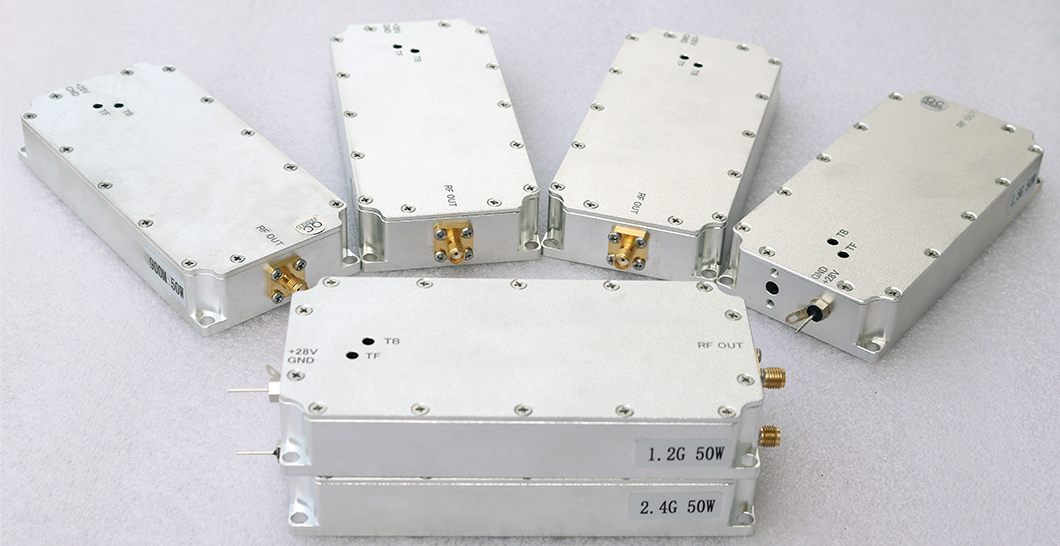
Most commercial and custom-built drones rely on various radio frequencies for control, video transmission, and navigation. Common frequency bands used by drones include:
400–500 MHz
800–1000 MHz
1.2 GHz to 1.6 GHz
2.4 GHz control links
5.8 GHz video transmission
Because drones can operate on different channels and protocols, a single-frequency jammer may not always be sufficient. Multi-band jammer modules provide broader protection by targeting multiple frequencies at once.
A multi-band drone jammer module is an RF interference unit capable of generating jamming signals across multiple frequency ranges. These modules are often integrated into anti-drone systems, portable jammers, or vehicle-mounted counter-UAS platforms.
Typical characteristics include:
Multiple RF output channels
Independent power amplification for each band
Adjustable frequency coverage
Compact modular design for easy system integration
This modular structure allows system designers to combine several bands into one complete counter-drone solution.
Multi-band modules allow a single system to cover several drone communication frequencies. This significantly increases the probability of disrupting unauthorized drones.
Modern drones may switch frequencies automatically to avoid interference. Multi-band jammers reduce this risk by covering multiple channels simultaneously.
Manufacturers and system integrators can select different frequency modules depending on the target environment or drone types.
Example configuration:
| Frequency Band | Typical Purpose |
|---|---|
| 400–500 MHz | Long-range control links |
| 840–1000 MHz | Telemetry and control signals |
| 1550–1620 MHz | Navigation or communication interference |
| 2.4 GHz | Consumer drone control |
| 5.8 GHz | Video transmission |
Combining several modules creates a comprehensive counter-drone interference system.
These modules are widely used in environments that require reliable drone protection, including:
Airports and aviation facilities
Military bases and border security
Government buildings
Critical infrastructure sites
Large public events and stadiums
In such locations, multi-frequency counter-drone systems help reduce the risk of unauthorized drone activity.
As drones become more sophisticated, counter-drone technologies must also advance. Future multi-band drone jammer modules are expected to feature higher efficiency, smarter frequency management, and improved integration with detection systems.
For security professionals and system integrators, investing in multi-band RF jamming capability is becoming increasingly important to ensure effective drone defense in complex environments.
86-13920737097
AddNo. 15, Rongyuan Road, Huayuan Industrial Park, Binhai Hi-tech Zone, Tianjin, China.
E-mailjackyjingtj@gmail.com
Copyright @ 2026 BNT PTE. LTD. No:84463
Copyright @ 2026 BNT PTE. LTD.
Copyright @ 2026BNT PTE. LTD.


