

Home > News > Industry news > Custom vs Standard Drone Jammer Modules: Which One Is Right for You?


With the increasing use of drones across commercial, recreational, and security applications, organizations are investing in drone jammer modules to protect sensitive areas. However, choosing between custom and standard drone jammer modules can be challenging. Each type offers distinct advantages and limitations, depending on operational needs, budget, and technical requirements. This article explores the key differences, helping you make an informed decision.
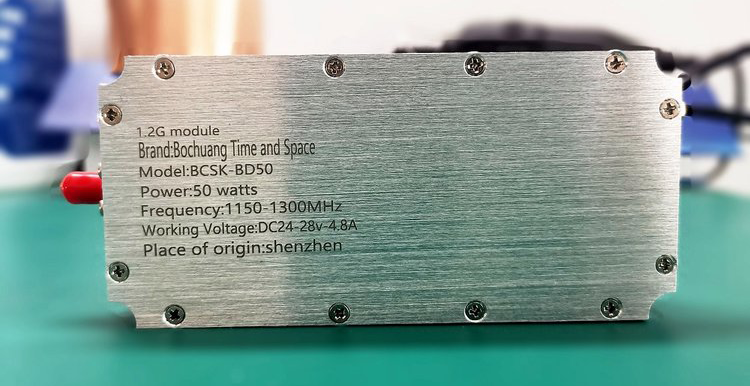
Standard drone jammer modules are pre-configured, off-the-shelf solutions designed for general drone interference applications. They typically cover common frequency bands used by consumer drones, such as 2.4GHz, 5.8GHz, and GPS frequencies.
Advantages of Standard Modules:
Immediate availability: Ready to deploy with minimal setup.
Lower cost: Economical compared to custom solutions.
Proven reliability: Tested for standard use cases.
Simpler integration: Easy to connect with existing security systems.
Limitations:
Limited to predefined frequencies and output power.
May not effectively counter specialized or military-grade drones.
Less flexibility for unique operational requirements.
Custom drone jammer modules are tailored solutions designed to meet specific operational needs. They can be configured for specific frequency ranges, power levels, and physical form factors to address unique security challenges.
Advantages of Custom Modules:
Tailored performance: Adjust frequency coverage and output power to target specific drones.
Enhanced flexibility: Designed for unique deployment scenarios, such as fixed installations, mobile units, or portable devices.
Future-proof: Can be updated or modified as drone technologies evolve.
Limitations:
Higher upfront cost due to design and manufacturing customization.
Longer lead time for development and delivery.
Requires technical expertise for proper deployment and maintenance.
| Feature | Standard Drone Jammer | Custom Drone Jammer |
|---|---|---|
| Frequency Coverage | Fixed common bands | Adjustable per requirements |
| Output Power | Predefined | Customizable |
| Deployment Speed | Immediate | Longer setup time |
| Cost | Lower | Higher |
| Flexibility | Limited | High |
| Use Case | General protection | Specialized or high-security scenarios |
Standard modules are ideal for organizations that need rapid deployment, cost efficiency, and general-purpose protection. They work well for:
Public events and gatherings.
Commercial buildings and offices.
Small-scale drone monitoring areas.
If your operations mostly involve consumer drones and low-risk areas, a standard module may suffice.
Custom modules are best suited for situations where unique security requirements or high-risk areas are involved. They are particularly effective for:
Critical infrastructure protection (airports, power plants, military sites).
Mobile security units requiring flexible form factors.
Specialized threats, such as high-performance or long-range drones.
Custom solutions allow you to adapt to evolving drone technologies and provide higher confidence in counter-drone performance.
While standard modules are more budget-friendly, custom modules require a larger initial investment. However, the long-term value of custom modules often outweighs costs in high-security environments due to:
Optimized performance for specific threats.
Reduced risk of drone incursions.
Potential for modular upgrades without replacing the entire system.
Both module types can integrate with existing security systems, but custom modules often require more technical expertise to deploy and maintain. Standard modules typically come with plug-and-play compatibility, making them simpler for organizations with limited technical resources.
Drones continue to evolve rapidly, with new frequencies and enhanced capabilities emerging each year. Custom modules offer a higher degree of future-proofing, as they can be upgraded or modified to meet new threats. Standard modules may become less effective against advanced drones over time.
Choosing between custom and standard drone jammer modules depends on your security requirements, budget, and operational environment. Standard modules provide a cost-effective, reliable solution for general-purpose protection, while custom modules offer flexibility, enhanced performance, and future-proofing for specialized or high-risk scenarios.
Organizations should carefully evaluate drone threat levels, deployment needs, and long-term objectives before making a selection. By understanding the differences and advantages of each option, you can implement a drone countermeasure strategy that ensures optimal security and protection.
86-13920737097
AddNo. 15, Rongyuan Road, Huayuan Industrial Park, Binhai Hi-tech Zone, Tianjin, China.
E-mailjackyjingtj@gmail.com
Copyright @ 2026 BNT PTE. LTD. No:84463
Copyright @ 2026 BNT PTE. LTD.
Copyright @ 2026BNT PTE. LTD.


