

Home > News > Industry news > Multi-Band Drone Jammer Modules: Why They Matter for Modern Counter-UAS Systems


As drone technology continues to evolve, so do the methods used to control and navigate unmanned aerial vehicles (UAVs). Modern drones no longer rely on a single frequency band; instead, they operate across multiple channels for control, video transmission, and satellite navigation. This shift has made multi-band drone jammer modules a critical component in today’s counter-UAS strategies.
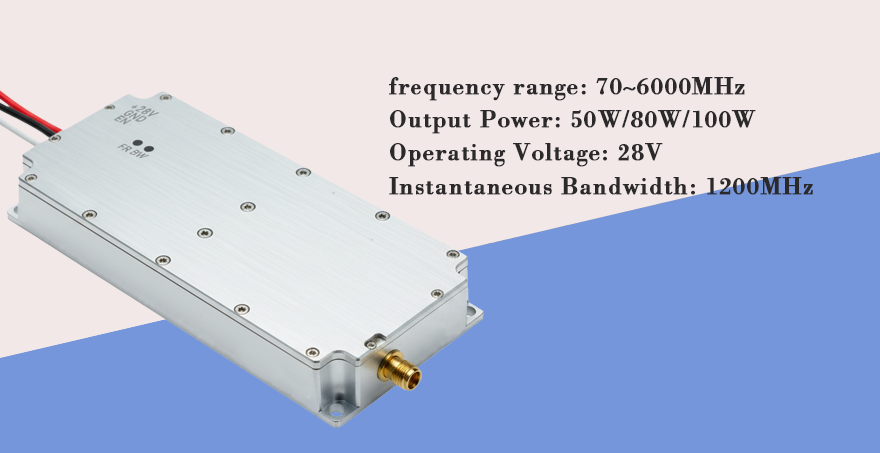
In this article, we explore why multi-band capability is essential and how it enhances the effectiveness of anti-drone systems.
Most commercial and industrial drones use a combination of frequency bands, including:
Advanced drones may also switch frequencies dynamically to avoid interference. Single-band jammers often struggle to keep up with this complexity, leaving gaps in protection.
Multi-band drone jammer modules address this issue by simultaneously targeting multiple frequency ranges, ensuring more comprehensive signal disruption.
The primary advantage of multi-band modules is their ability to disrupt multiple communication links at once. By covering control, navigation, and video transmission frequencies, these modules can:
This multi-layered interference significantly increases the success rate of drone mitigation.
Different operational environments present unique challenges. Urban areas, for example, are crowded with RF signals, while open areas may require long-range interference.
Multi-band drone jammer modules provide the flexibility to adapt to these conditions by:
This adaptability makes them suitable for both civilian and defense applications.
By operating across multiple bands, these modules can maintain effective jamming even if a drone switches frequencies. This ensures continuous coverage and reduces the likelihood of signal escape.
Additionally, multi-band systems can be paired with high-power amplifiers to extend operational range, making them ideal for large-area protection such as airports, borders, and critical infrastructure.
Today’s counter-UAS solutions rely on a combination of detection, tracking, and mitigation technologies. Multi-band drone jammer modules play a key role in the mitigation phase.
They can be easily integrated into:
Their modular design also allows system integrators to scale capabilities based on mission requirements.
Drone communication technologies are constantly evolving, with new frequency bands and transmission methods emerging. Investing in multi-band drone jammer modules helps future-proof your system by ensuring compatibility with a wider range of threats.
This reduces the need for frequent upgrades and provides long-term value for security operators.
When selecting a multi-band drone jammer module, consider the following factors:
A well-designed module should balance performance, reliability, and scalability.
In an era of increasingly sophisticated drone threats, relying on single-frequency solutions is no longer sufficient. Multi-band drone jammer modules offer a more comprehensive, adaptable, and future-ready approach to UAV mitigation.
By covering multiple communication channels simultaneously, these modules play a vital role in enhancing the effectiveness of modern counter-UAS systems and ensuring robust airspace security.
86-13920737097
AddNo. 15, Rongyuan Road, Huayuan Industrial Park, Binhai Hi-tech Zone, Tianjin, China.
E-mailjackyjingtj@gmail.com
Copyright @ 2026 BNT PTE. LTD. No:84463
Copyright @ 2026 BNT PTE. LTD.
Copyright @ 2026BNT PTE. LTD.


