

Home > News > Industry news > Low-Frequency Drone Jammer Modules for Long-Range Interference: Benefits and Applications


As drone threats continue to expand across both civilian and defense sectors, achieving reliable long-range interference has become a top priority. While high-frequency bands are commonly used in drone communications, low-frequency drone jammer modules play a critical role in extending jamming distance and improving signal penetration.
This article explores how low-frequency modules work, their advantages, and where they are most effectively deployed.
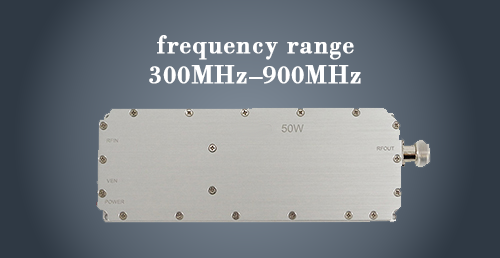
Low-frequency drone jammer modules are RF interference devices designed to operate in lower frequency ranges, typically below 1GHz (such as 300MHz–900MHz). These frequencies are sometimes used in long-range drone control systems, telemetry links, or specialized UAV applications.
Compared to higher frequency bands, low-frequency signals behave differently in terms of propagation, making them highly valuable for specific counter-UAS scenarios.
The primary advantage of low-frequency signals lies in their propagation characteristics. Lower frequencies:
These properties allow low-frequency drone jammer modules to achieve extended jamming coverage, especially in open or semi-obstructed areas.
Some drones, particularly those designed for industrial or military use, rely on lower frequency bands for extended communication range. These links are often more resistant to interference from standard high-frequency jammers.
By deploying low-frequency jammer modules, operators can:
This makes them an essential tool in layered defense strategies.
Low-frequency drone jammer modules are especially effective in environments where high-frequency signals struggle, such as:
Their ability to penetrate obstacles ensures more reliable performance, even in non-line-of-sight conditions.
While low-frequency modules are powerful, they are most effective when combined with higher frequency jamming solutions. Modern counter-UAS systems often integrate:
This multi-layered approach ensures comprehensive coverage across all potential drone communication channels.
When selecting a low-frequency drone jammer module, several technical factors should be evaluated:
A well-optimized module should balance long-range capability with stable and efficient operation.
Low-frequency drone jammer modules are widely used in scenarios that require extended coverage, including:
Their long-range capability makes them particularly suitable for protecting wide and open spaces.
As drone communication technologies evolve, the importance of low-frequency interference continues to grow. Future developments may include:
These advancements will further enhance the effectiveness of low-frequency drone jammer modules in next-generation counter-UAS systems.
Low-frequency drone jammer modules are a vital component in achieving long-range interference and reliable UAV disruption. Their superior propagation characteristics and ability to penetrate obstacles make them indispensable in complex and large-scale environments.
By integrating low-frequency solutions into a broader anti-drone strategy, operators can significantly improve coverage, adaptability, and overall system effectiveness.
86-13920737097
AddNo. 15, Rongyuan Road, Huayuan Industrial Park, Binhai Hi-tech Zone, Tianjin, China.
E-mailjackyjingtj@gmail.com
Copyright @ 2026 BNT PTE. LTD. No:84463
Copyright @ 2026 BNT PTE. LTD.
Copyright @ 2026BNT PTE. LTD.


