

Home > News > Industry news > Drone Jamming Modules: Core Technologies and Operating Principles in Modern Counter-UAS Systems


As the proliferation of commercial and consumer drones continues to accelerate, the need for effective counter-unmanned aerial system (C-UAS) solutions has never been more critical. From critical infrastructure protection to military force protection, the ability to detect and neutralize unauthorized drones has become a core security requirement. At the heart of these counter-drone systems lies the drone jamming module—the component responsible for the “soft kill” capability that disrupts, disables, or diverts hostile UAVs.
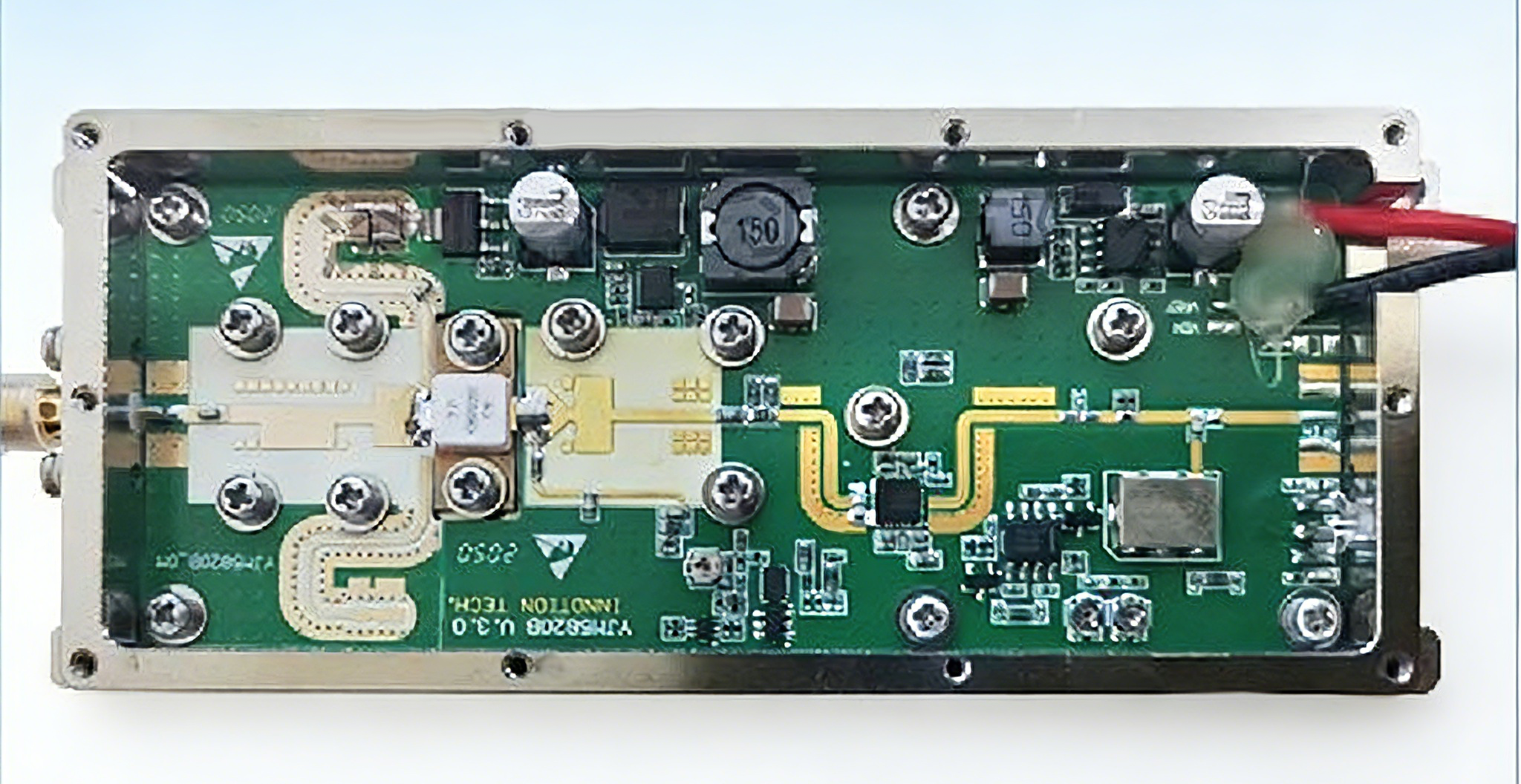
This article explores the existing technologies, operating principles, and key components of modern drone jamming modules, providing a technical overview for security professionals and system integrators.
Drone jamming modules operate on a relatively straightforward principle: they emit electromagnetic signals at specific radio frequencies to overpower or interfere with the communication links between a drone and its operator, or between the drone and navigation satellites .
When a jammer’s signal successfully disrupts these connections, the drone typically enters one of several pre-programmed fail-safe modes:
Return to Home (RTH): The drone attempts to fly back to its takeoff point
Forced Landing: The drone descends vertically at its current location
Hover in Place: The drone remains stationary until the battery depletes
The specific response depends on the drone’s firmware and which communication links were jammed—control links, video transmission, or GPS navigation signals .
Modern jamming modules are sophisticated assemblies that integrate several critical components. Understanding these subsystems is essential for evaluating system performance.
The frequency synthesizer is responsible for generating the jamming signal at the desired frequency. Advanced synthesizers can rapidly switch between multiple frequency bands, enabling the jamming module to target different navigation and communication systems. For example, a single module may be designed to jam GPS, GLONASS, and BeiDou (BD) navigation signals, switching frequencies across these modes to prevent precise positioning .
The power amplifier determines the effective range of the jamming module. Higher output power translates to greater jamming distance, though it also increases power consumption and thermal management requirements. Commercial systems typically range from 10W to 100W per channel, with total system power consumption exceeding 900W in some configurations .
The transmission power is also subject to regulatory constraints. For civilian applications, systems often must comply with strict limits—for instance, the GA1551-2019 standard for petroleum and petrochemical facilities mandates signal transmission power ≤10mW .
Antenna configuration determines the coverage pattern of the jamming module:
Directional Antennas: Focus energy in a narrow beam (15-30 degrees), providing extended range and precision targeting
Omnidirectional Antennas: Provide 360-degree coverage, ideal for perimeter protection
Some systems offer modular antenna configurations, allowing users to optimize coverage based on specific application environments .
Drone jamming modules must cover the frequency bands commonly used by commercial drones. Most systems target the following bands:
| Frequency Band | Typical Usage | Common Applications |
|---|---|---|
| 400 MHz | ISM band | Long-range control links |
| 900 MHz | ISM band | Control and telemetry |
| 1.2 GHz | Video transmission | Analog FPV systems |
| 1.5 GHz | GPS/GLONASS/BeiDou | Satellite navigation |
| 2.4 GHz | ISM band | Primary control link for consumer drones |
| 5.2-5.8 GHz | ISM band | Video transmission and secondary control |
Modern jamming modules support simultaneous multi-band operation, allowing them to counter drones that employ frequency-hopping spread spectrum (FHSS) or multiple redundant communication links . Advanced systems from manufacturers like Rohde & Schwarz can jam across the entire spectrum without gaps in time or frequency, a critical capability when facing drone swarms operating on multiple frequencies simultaneously .
While traditional jamming modules rely on brute-force signal suppression, advanced systems incorporate navigation spoofing capabilities. Rather than simply blocking GPS signals, these modules transmit伪造 (spoofed) navigation data that causes the drone to follow a predetermined flight path.
Navigation deception modules simulate signals from multiple satellite constellations—GPS, GLONASS, BeiDou, and Galileo—allowing operators to:
Create virtual no-fly zones
Guide drones to safe landing areas
Drive drones away from protected airspace at any angle
Force drones to follow operator-specified trajectories
This approach offers significant advantages over simple jamming: the drone remains controllable (by the defender) rather than entering unpredictable fail-safe modes, and it reduces the risk of drones falling unpredictably.
Emerging research has demonstrated novel approaches to electronic warfare that create selective interference zones. Using coordinated pairs of drones, one unit generates standard jamming signals while a second emits precisely synchronized signals designed to cancel the jamming effect at specific locations through destructive interference .
This beamforming and phase control technique creates localized “null zones”—areas where friendly communications can operate normally within an otherwise disrupted battlespace. While still in the research domain, this capability represents a significant evolution toward precision, selective interference .
Modern jamming modules do not operate in isolation. Effective C-UAS solutions integrate jamming with detection subsystems that provide targeting intelligence:
RF Sensors: Detect drone communication links and provide direction finding
Radar: Provides long-range detection regardless of weather conditions
Electro-Optical/Infrared Cameras: Enable visual identification and tracking
Acoustic Sensors: Detect drones by their unique propeller signatures
When a threat is detected and verified, the system automatically directs the jamming module to engage the target. This integrated approach enables precise, targeted jamming rather than blanket spectrum denial .
An alternative to RF-based jamming, acoustic resonance mitigation (ARM) technology uses directed sonic, ultrasonic, or subsonic waves to disable drones. The acoustic energy induces vibrations in drone components—particularly propeller blades—that lead to flight failure. This approach offers a potential solution for environments where RF jamming is legally restricted .
The trend toward integrated platforms combines detection, suppression, and deception in unified systems. Products like the Anti Drone-TB-III integrate RF detection, power suppression, and navigation spoofing in a single unit with IP67 protection, enabling deployment in harsh environments .
Drone jamming modules have evolved significantly from simple single-frequency noise generators to sophisticated, multi-band, software-defined systems capable of selective engagement and navigation deception. As drone threats continue to evolve—with armed FPV drones, autonomous swarm operations, and jam-resistant communication links becoming more common—jamming technology will continue to advance.
For security professionals and infrastructure operators, understanding these core technologies is essential for selecting and deploying effective counter-drone solutions. The choice of jamming module—whether focused on brute-force suppression, precision spoofing, or integrated detection-to-defeat—must align with operational requirements, regulatory constraints, and the specific threat environment.
86-13920737097
AddNo. 15, Rongyuan Road, Huayuan Industrial Park, Binhai Hi-tech Zone, Tianjin, China.
E-mailjackyjingtj@gmail.com
Copyright @ 2026 BNT PTE. LTD. No:84463
Copyright @ 2026 BNT PTE. LTD.
Copyright @ 2026BNT PTE. LTD.


