

Home > News > Industry news > Drone Jamming Modules: Answers to 15 Frequently Asked Questions


Drone jamming modules are critical components in modern counter-UAV systems. Whether you’re integrating them into a defense solution or researching for a procurement project, understanding how these modules work and what to look for is essential. This FAQ guide addresses the most common questions about drone jamming modules to help you make informed decisions.
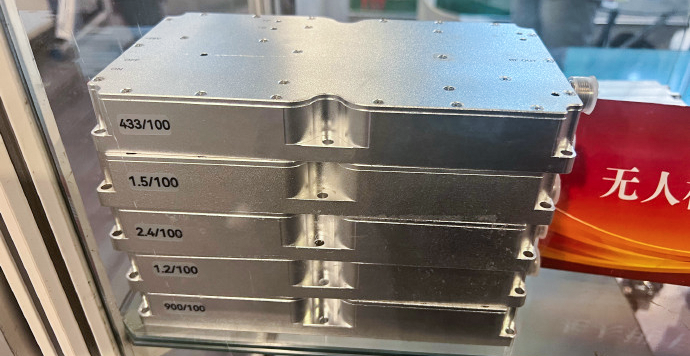
A drone jamming module is a radio frequency (RF) device designed to disrupt communication between a drone and its operator. It emits interference signals on specific frequencies used for drone control and video transmission, effectively neutralizing the threat by forcing the drone to land, return to home, or lose connection.
The module generates high-power RF signals that overwhelm the drone’s receiver on its operating frequencies. By creating “noise” on those channels, the drone cannot interpret commands from its remote controller or transmit video back to the operator. Most modules use techniques like barrage jamming, swept jamming, or smart jamming.
Common drone frequencies include:
2.4 GHz (most consumer drones)
5.8 GHz (video transmission)
1.2 GHz / 1.3 GHz (custom FPV systems)
433 MHz / 868 MHz / 915 MHz (control links)
4G/5G cellular bands (industrial drones)
Professional modules often offer customizable frequency bands to cover emerging threats.
A jamming module is the core RF component that generates the jamming signal. A complete counter-drone system typically includes detection (radar, RF scanners, cameras), tracking, jamming modules, and a central control unit. The module is the “weapon,” while the system provides the “eyes and brain.”
50W (47dBm) refers to the module’s RF output power. Higher power generally means:
Longer effective range (typically 1-5 km depending on environment)
Better penetration through obstacles
Ability to overwhelm stronger drone signals
However, power must be balanced with thermal management and regulatory compliance.
GaN technology offers several advantages over traditional silicon-based amplifiers:
Higher efficiency (less heat generation)
Greater power density (smaller size for same power)
Wider bandwidth capability
Better performance at high temperatures
Longer operational life
Instantaneous bandwidth means the module can cover a wide frequency range simultaneously without tuning or switching. This is crucial because:
Different drones operate on different frequencies
Some drones frequency hop rapidly
You need to jam multiple channels at once for effective neutralization
Sweep speed refers to how quickly the module scans across its frequency range. Faster sweep speeds (e.g., 270 kHz or higher) can:
Counter frequency-hopping drones
Cover more frequencies in less time
Reduce response time to new threats
Some modules offer adjustable sweep speeds from 100-500 kHz.
Common options include:
Internal noise generator – Simple broadband jamming
VCO (Voltage Controlled Oscillator) – Tuning flexibility
DDS (Direct Digital Synthesis) – Precise frequency control
SDR (Software Defined Radio) – Maximum flexibility and waveform customization
Most professional modules are designed for easy integration with:
50Ω input/output impedance – Standard RF interface
SMA connectors – Common in RF systems
Compact form factors – Fit into portable or fixed installations
Standard voltage requirements – Typically 24-28V DC
Reputable manufacturers offer:
Custom frequency bands (e.g., 5150-5250 MHz, 6500-6700 MHz)
Adjustable sweep speeds
Alternative modulation sources (VCO, DDS, SDR)
Modified mechanical dimensions
Extended temperature ranges
Conformal coating for harsh environments
For comprehensive protection, you may need multiple modules covering different bands (e.g., 2.4 GHz, 5.8 GHz, and cellular bands). Some manufacturers offer multi-band integrated solutions, but individual modules provide flexibility to customize coverage based on local threats.
Range depends on multiple factors:
Output power – Higher power = longer range
Antenna gain – Directional antennas extend range
Environmental conditions – Line-of-sight vs. urban/forested areas
Drone type – Consumer drones vs. industrial/commercial
Typical ranges vary from 500 meters to 5+ kilometers.
Regulations vary significantly by country:
Most countries restrict civilian use of jammers
Government, military, and law enforcement typically have authorized use
Critical infrastructure operators may require special permits
Always consult local regulations and legal counsel before deployment
Consider these factors:
Threat assessment – What drones are you likely to face?
Frequency coverage – Does it match local drone activity?
Power requirements – Enough for your operational range?
Integration capabilities – Does it fit your existing system?
Environmental conditions – Outdoor/indoor, temperature range?
Budget – Balance performance with cost
| Parameter | Typical Range | Why It Matters |
|---|---|---|
| Frequency Bands | 400MHz – 6GHz+ | Covers different drone types |
| Output Power | 10W – 100W+ | Determines effective range |
| Sweep Speed | 100 – 500 kHz | Counters frequency hopping |
| Operating Voltage | 24 – 28V DC | Power system compatibility |
| Operating Temp | -20°C to +65°C | Environmental suitability |
| Impedance | 50Ω | Standard RF integration |
| Dimensions | Varies by power | Space constraints |
| Weight | 200g – 1kg+ | Portability considerations |
Selecting the right drone jamming module requires careful analysis of your specific operational requirements, threat environment, and integration needs. Contact our technical team with your project details for personalized recommendations and customization options.
Get Expert Advice → Share your requirements for a customized solution
86-13920737097
AddNo. 15, Rongyuan Road, Huayuan Industrial Park, Binhai Hi-tech Zone, Tianjin, China.
E-mailjackyjingtj@gmail.com
Copyright @ 2026 BNT PTE. LTD. No:84463
Copyright @ 2026 BNT PTE. LTD.
Copyright @ 2026BNT PTE. LTD.


