

Home > News > Industry news > 2.4GHz and 5.8GHz Drone Jamming Modules: WiFi-Based UAV Countermeasures Explained


As drone technology continues to evolve, many commercial and consumer drones rely on WiFi-based communication systems for control and video transmission. The 2.4GHz and 5.8GHz frequency bands are widely used by drone manufacturers because they offer reliable connectivity and relatively high data transfer rates.
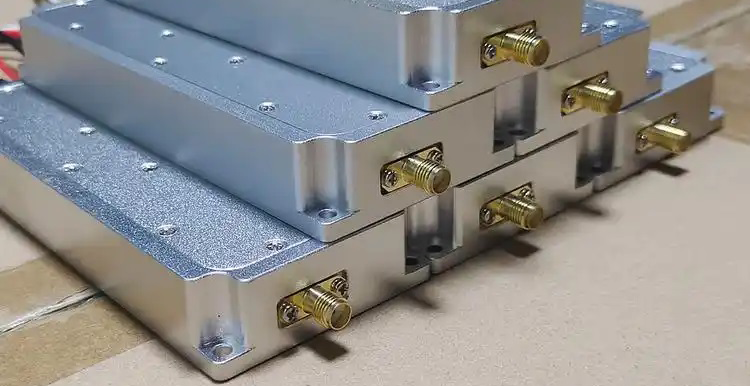
However, these same frequencies also create vulnerabilities that can be targeted by drone jamming modules. By disrupting signals in these bands, counter-drone systems can effectively prevent unauthorized drones from operating in protected areas.
Most consumer drones operate using radio frequency links in the 2.4GHz or 5.8GHz spectrum. These frequencies are commonly used for WiFi communication and provide a balance between transmission distance and bandwidth.
Typical uses of these frequencies include:
2.4GHz band – Drone control signals and telemetry data
5.8GHz band – High-definition video transmission and additional control channels
Because these bands are so widely used in drone communication, they have become primary targets for anti-drone jamming technologies.
A drone jammer module is a specialized RF device designed to transmit interference signals across specific frequency ranges used by drones. When activated, the module overwhelms the communication link between the drone and its remote controller.
As a result, the drone may:
Lose connection with its operator
Enter hover mode
Trigger an automatic return-to-home function
Perform an emergency landing
These modules are often integrated into larger counter-UAS systems, handheld anti-drone guns, or fixed security installations.
The 2.4GHz band is one of the most common frequencies used for drone control systems. Jamming this band can directly interrupt the command signals sent from the remote controller.
Effective Control Signal Disruption
By blocking the control channel, the drone can no longer receive commands from the operator.
Wide Compatibility
Many commercial drones use 2.4GHz communication, making this band highly relevant for counter-drone applications.
Longer Transmission Range
Compared with higher frequencies, 2.4GHz signals often support longer communication distances, which means jamming this band can affect drones operating farther away.
The 5.8GHz band is frequently used for video transmission and additional communication channels between the drone and the ground controller.
Disrupts Video Transmission
Blocking the video downlink can prevent operators from seeing live footage, making it difficult to control the drone accurately.
Targets Modern UAV Systems
Many advanced drones rely on dual-band communication systems that include 5.8GHz.
Supports Multi-Band Countermeasures
When combined with 2.4GHz jamming, 5.8GHz modules significantly improve overall counter-drone effectiveness.
Modern drones often use dual-band or multi-frequency communication systems to improve signal stability. For this reason, many counter-drone solutions combine both 2.4GHz and 5.8GHz jamming modules.
Advantages of multi-band systems include:
Increased probability of disrupting drone communications
Better compatibility with different drone models
Stronger protection against advanced UAV technologies
By covering multiple frequency bands, security systems can provide more reliable drone defense.
Drone jamming modules operating in these bands are commonly used in various security scenarios, such as:
Airport and airspace protection
Military and defense installations
Border security
Government facilities
Large public events and stadiums
In many cases, these modules are integrated with detection systems to create a complete counter-drone defense network.
The 2.4GHz and 5.8GHz frequency bands play a critical role in modern drone communication systems. As a result, drone jamming modules designed for these frequencies have become essential tools in WiFi-based UAV countermeasures.
By targeting the control and video transmission channels used by drones, these modules help security teams effectively neutralize unauthorized UAV activity. When combined with multi-band counter-drone systems and detection technologies, they provide a reliable solution for protecting sensitive areas from drone threats.
86-13920737097
AddNo. 15, Rongyuan Road, Huayuan Industrial Park, Binhai Hi-tech Zone, Tianjin, China.
E-mailjackyjingtj@gmail.com
Copyright @ 2026 BNT PTE. LTD. No:84463
Copyright @ 2026 BNT PTE. LTD.
Copyright @ 2026BNT PTE. LTD.


