

Home > News > Industry news > The Ultimate Guide to Drone Jamming Modules: Classification and Technical Insights


As the threat posed by rogue drones continues to escalate across military and civilian sectors, the technology designed to counter them has become increasingly sophisticated. At the heart of most non-kinetic Counter-UAS (C-UAS) solutions lies the jamming module—the critical component responsible for disrupting the link between a drone and its operator.
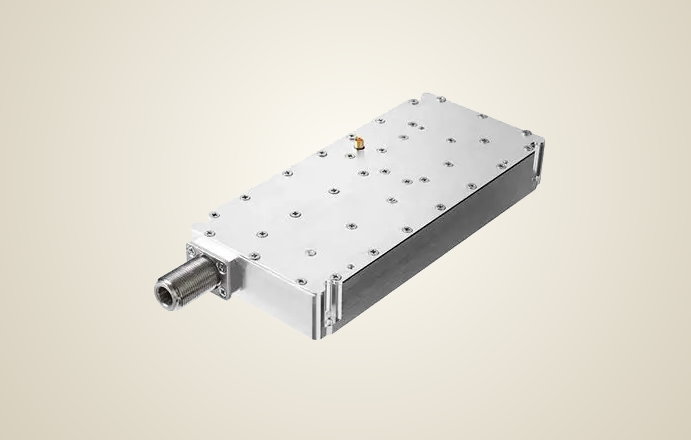
Understanding the different types of jamming modules is essential for security professionals, integrators, and procurement officers seeking the right defense mechanism. This guide provides a comprehensive classification of drone jamming modules based on their technology, form factor, signal type, and operational strategy.
The method by which a jamming module disrupts a drone dictates its effectiveness against various targets. There are three primary technological approaches.
RF jammers are the most common type of counter-drone technology. They function by emitting high-intensity noise or interference signals on the same frequencies that drones use for communication and control.
How it Works: Most commercial drones operate in the unlicensed ISM bands, typically 2.4 GHz and 5.8 GHz. An RF jammer floods these bands with “noise,” effectively drowning out the legitimate signal from the remote controller. When the drone loses communication, it will either return to its home point (if programmed to do so) or land immediately.
Application: Ideal for perimeter security at prisons, airports, and event venues where forcing a drone to land or return is the desired outcome.
Drones rely heavily on Global Navigation Satellite Systems (GNSS), such as GPS, GLONASS, or BeiDou, for positioning and stable hovering. Targeting these signals is a highly effective way to disable a drone.
GNSS Jammers: These modules simply block the satellite signals (typically in the L1 and L5 bands), causing the drone to lose its position lock. Without GPS, many drones cannot maintain a stable hover and will drift or initiate a controlled descent.
GNSS Spoofers: A more advanced technology. Instead of just blocking the signal, spoofers transmit fake GPS coordinates to the drone. This can trick the UAV into flying to a false location or confuse its navigation system entirely. This is particularly useful against drones programmed for autonomous flight paths that ignore RF jamming.
Not all drones are created equal. Some use proprietary communication protocols or frequency-hopping spread spectrum (FHSS) to avoid simple noise jamming.
How it Works: Protocol-specific jammers analyze the digital communication protocol being used by the drone. Once identified, they inject specific data packets or de-authentication commands into the stream, forcing the drone to disconnect from the controller. This is often referred to as “smart jamming.”
Advantage: More targeted and requires less power than broad-spectrum noise jamming, though it requires constant updating to keep up with new drone models.
Jamming modules are also defined by the specific frequency ranges they cover. A comprehensive system often requires multiple bands to handle the variety of drones and control methods.
2.4 GHz & 5.8 GHz Jammers: These cover the standard Wi-Fi and ISM bands used by 90% of consumer drones (DJI, Autel, etc.). This is the baseline for any C-UAS system.
433 MHz & 900 MHz Jammers: Many industrial and long-range drones, as well as FPV (First Person View) racing drones, use lower frequencies for better penetration and range. Jammers covering these bands are essential for countering non-standard or custom-built UAVs.
L1/L5 GNSS Jammers: Specifically target satellite navigation. Critical for stopping drones that rely on GPS for autonomous return-to-home functions.
4G/5G Jammers: As drones begin to use cellular networks for beyond-visual-line-of-sight (BVLOS) operations, jammers that target LTE and 5G bands are becoming increasingly important.
The physical design of a jamming module dictates where and how it can be used, ranging from handheld devices to large, vehicle-mounted arrays.
These are man-portable devices, often designed to look like a rifle or a compact electronic unit. They are the frontline defense for tactical teams.
Characteristics: Directional (requiring the operator to aim at the drone), battery-powered, and designed for short-range use (typically 500m to 2km).
Use Case: Ideal for SWAT teams, VIP protection details, and rapid response units where mobility is key. The DroneGun is a classic example of a portable jammer.
Pros: Highly mobile, immediate deployment.
Cons: Requires a line of sight and an operator to aim; limited operational time due to battery life.
These modules are mounted on pan-tilt units or gimbals and are aimed precisely at the target using radar or optical tracking data.
Characteristics: Higher power output than handhelds, focused beam, integrated with command-and-control software.
Use Case: Protecting fixed assets like military bases, power plants, or prisons. The jammer only activates when a threat is confirmed and tracks it until neutralized.
Pros: Long range, reduced collateral interference (since the beam is focused).
Cons: Mechanical complexity, single-target engagement.
These modules broadcast jamming signals in a 360-degree pattern around the protected asset.
Characteristics: Creates a protective “dome” or “curtain” around a facility.
Use Case: Creating a permanent no-fly zone over a prison yard or a temporary sterile zone around a political summit.
Pros: No need for aiming; covers all approaches simultaneously.
Cons: Higher risk of interfering with legitimate communications outside the protected zone; requires careful power management.
These are high-power systems that can be transported in vehicles or carried as a heavy backpack for tactical deployments. They often combine multiple jamming bands into a single unit and are designed for sustained operations in the field.
While “jamming” typically falls under the “soft kill” category, it’s important to understand where jamming modules fit in the broader C-UAS kill chain.
Soft Kill (Electronic Warfare): This includes all the RF and GNSS jamming modules mentioned above. They neutralize the threat without physically destroying the drone. The outcomes can be:
Forced Landing: The drone lands vertically due to loss of control.
Return to Home (RTH): The drone flies back to its launch point, potentially leading authorities to the operator.
Hover or Drift: The drone gets confused and stays put or drifts with the wind.
Hard Kill (Kinetic): This involves physically destroying the drone using projectiles, lasers, or interceptor drones. Jamming modules often work in tandem with hard-kill systems by slowing down or hovering the drone to present an easier target for kinetic interceptors.
The drone-jamming arms race is accelerating. As drone manufacturers implement anti-jamming features (such as frequency hopping and encrypted control links), jamming modules must evolve.
The next generation of jamming modules is moving towards Cognitive Electronic Warfare. These systems use AI and machine learning to:
Analyze the RF spectrum in real-time to identify unknown signals.
Classify the drone model and its communication protocol.
Select the optimal jamming technique (noise, protocol-specific, or spoofing) automatically.
Adapt to frequency changes in milliseconds to maintain the jamming link.
This shift from brute-force noise emission to intelligent, adaptive disruption represents the future of effective counter-drone technology.
Drone jamming modules are the invisible shields of modern security. From the simple handheld RF gun used by police to stop a nuisance drone over a stadium, to the complex, multi-band, AI-driven jammers protecting a nuclear facility, the classification is vast and varied.
Choosing the right jamming module requires a deep understanding of the threat environment: Are you facing consumer drones or industrial UAVs? Do you need a directional or omnidirectional field? Is your priority to force a landing or to capture the operator via Return-to-Home?
By understanding the classifications outlined in this guide—by technology, frequency, form factor, and strategy—security professionals can make informed decisions to effectively safeguard their airspace against the evolving threat of unmanned aerial systems.
86-13920737097
AddNo. 15, Rongyuan Road, Huayuan Industrial Park, Binhai Hi-tech Zone, Tianjin, China.
E-mailjackyjingtj@gmail.com
Copyright @ 2026 BNT PTE. LTD. No:84463
Copyright @ 2026 BNT PTE. LTD.
Copyright @ 2026BNT PTE. LTD.


