

Home > News > Company dynamics > The Critical Importance of Heat Dissipation in High-Power Drone Jammer Modules


In the world of counter-drone technology, power is essential. High-power drone jammer modules are the muscle behind effective anti-UAS systems, capable of projecting jamming signals over long distances to neutralize hostile drones. However, with great power comes a great challenge: heat.
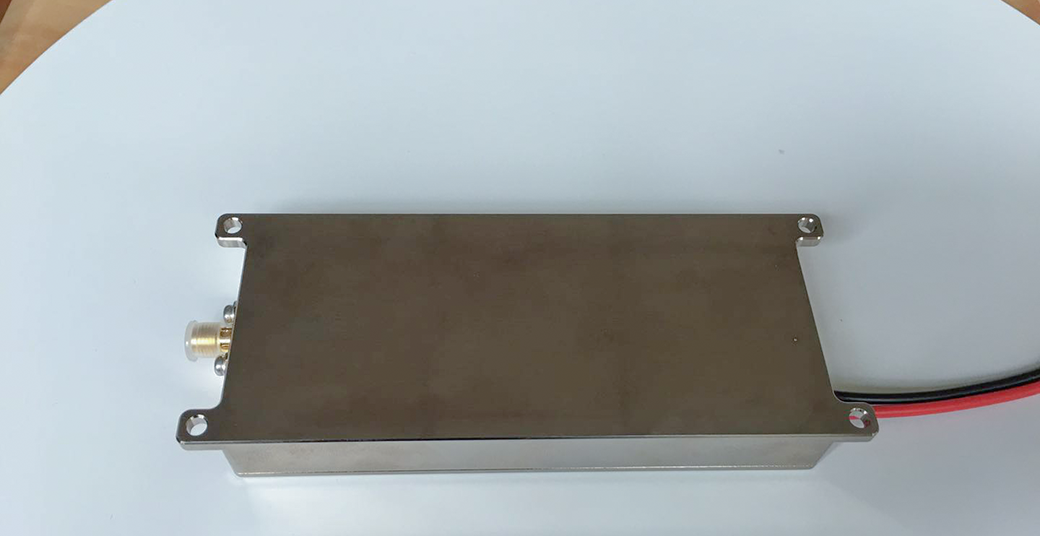
A jammer module that generates 100W or 200W of RF output is also generating significant thermal energy as a byproduct. If this heat is not managed effectively, the module’s performance degrades, components fail prematurely, and the entire security system can go offline at the worst possible moment. This article explores why heat dissipation is not just a technical detail—it is a critical factor in the reliability and effectiveness of modern counter-drone defenses.
To understand the importance of cooling, we must first understand the efficiency of RF amplifiers. No amplifier is 100% efficient. A typical high-power amplifier might convert only 40-60% of the input power into usable RF energy. The remaining 40-60% is lost as heat.
For a 200W jammer module operating at 50% efficiency, that means 200W of power is being dissipated as heat inside the device. Imagine a powerful space heater compressed into a small, enclosed module. Without proper heat dissipation, temperatures can soar in seconds, leading to:
Frequency Drift: Heat causes components to expand, altering the electrical characteristics and causing the jamming frequency to drift away from the target.
Power Roll-Off: Amplifiers automatically reduce output power to protect themselves from thermal damage (thermal throttling), weakening the jamming effect.
Component Failure: Prolonged exposure to high heat degrades solder joints, capacitors, and semiconductor dies, leading to permanent failure.
Manufacturers like BNTJammer employ several strategies to keep high-power modules cool under pressure.
The choice of semiconductor material is the first line of defense. Traditional silicon-based amplifiers (LDMOs) are giving way to Gallium Nitride (GaN) .
Higher Efficiency: GaN chips operate at higher efficiencies than silicon, meaning less input power is wasted as heat for the same RF output.
Higher Temperature Tolerance: GaN devices can operate reliably at much higher junction temperatures (often 200°C or more) compared to silicon. This provides a greater safety margin before failure.
Once the heat leaves the chip, it must be moved away from the sensitive electronics.
Heat Sinks: Large, finned aluminum or copper structures increase the surface area exposed to air, allowing heat to radiate away. The design of these heat sinks—fin density, orientation, and material—directly impacts cooling performance.
Thermal Interface Materials: Thermal pastes, pads, or phase-change materials bridge the microscopic gaps between the heat-generating chip and the heat sink, ensuring efficient heat transfer.
Depending on the deployment scenario, different cooling methods are used:
Passive Cooling: Relies solely on natural convection and radiation. It is silent, consumes no power, and has no moving parts to fail. Ideal for covert fixed installations where silence is golden.
Active Cooling: Uses fans (forced air) or liquid cooling systems to move heat more aggressively. Essential for high-power, continuous-duty cycles in portable or vehicle-mounted systems where size is constrained.
Choosing a drone jammer module without robust thermal management can have severe real-world consequences:
1. Intermittent Protection
Imagine a vehicle-mounted system protecting a convoy. After 15 minutes of operation in the desert sun, the jammer module overheats and shuts down. Minutes later, a drone appears. The system is silent, and the convoy is vulnerable.
2. Reduced Operational Lifespan
Consistently running electronics at high temperatures accelerates aging. A module that could last ten years with proper cooling might fail after just one year of thermal abuse, leading to high replacement costs and system downtime.
3. Unstable Jamming Performance
Thermal drift can cause the jammer to miss its target. If the frequency shifts even slightly, the drone’s communication link may remain intact, rendering the jamming attempt useless.
As highlighted on the BNTJammer website, the company places a premium on designs that ensure “stable continuous operation” and “high efficiency.” Their use of advanced GaN chips is a direct response to the heat challenge, ensuring that modules “can work continuously and stably.”
This commitment to thermal management is what makes BNTJammer modules suitable for demanding applications, from portable handheld units to fixed-site installations. By prioritizing heat dissipation, they ensure that when a security operator presses the “jam” button, the system delivers full power, for as long as it takes, without faltering.
For system integrators building anti-drone solutions, here are key considerations regarding heat:
Match the Cooling to the Duty Cycle: A system that jams intermittently (e.g., triggered by radar) has different cooling needs than one that runs 24/7.
Consider the Installation Environment: A module in an air-conditioned control room has an easier life than one inside a black metal box on a sun-baked roof. Account for ambient temperatures.
Monitor Temperature: Integrate temperature sensors and monitoring software. Knowing the thermal status of your jammers allows for predictive maintenance and prevents unexpected failures.
Trust Reputable Manufacturers: Work with proven suppliers like BNTJammer who design for thermal reality, not just theoretical specs.
In the high-stakes game of drone defense, reliability is everything. A jammer that fails due to heat is worse than no jammer at all—it creates a false sense of security. By understanding the critical importance of heat dissipation and choosing modules engineered for thermal excellence, security professionals can ensure their counter-drone systems are ready to perform when it matters most.
86-13920737097
AddNo. 15, Rongyuan Road, Huayuan Industrial Park, Binhai Hi-tech Zone, Tianjin, China.
E-mailjackyjingtj@gmail.com
Copyright @ 2026 BNT PTE. LTD. No:84463
Copyright @ 2026 BNT PTE. LTD.
Copyright @ 2026BNT PTE. LTD.


