

Home > News > Industry news > Equipment with Drone Jamming Modules: Backpacks, Vehicles & Arrays


When we think of counter-drone technology, the iconic image of a person aiming a large drone jammer gun at the sky often comes to mind. While these handheld disruptors are highly effective, they represent just one piece of a much larger technological puzzle. At the heart of almost every anti-drone system lies a critical component: the drone jamming module.
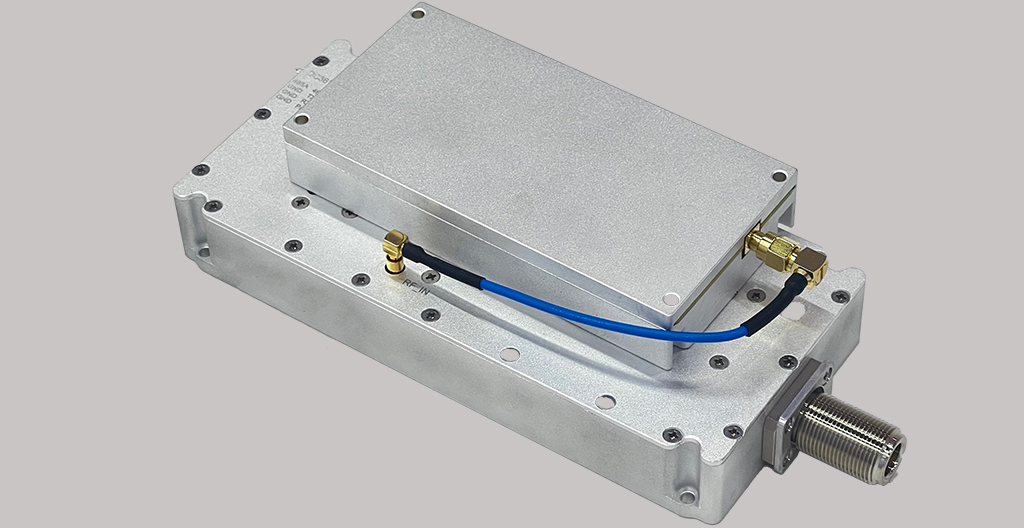
This article delves into the world of drone jamming modules, exploring the diverse types of equipment that utilize them to secure airspace. From portable backpacks to vehicle-mounted systems, the applications of this technology are broader and more versatile than you might expect.
A drone jamming module is the core electronic unit responsible for generating and emitting the disruptive radio frequency signals that neutralize drones. It is the “engine” that powers the jamming effect. These modules are designed to be integrated into various platforms, allowing for flexibility depending on the operational requirements.
Typically, a module consists of:
Signal Generators: To create interference on specific frequencies (2.4 GHz, 5.8 GHz, GPS).
Power Amplifiers: To boost the signal to a sufficient strength to overwhelm the drone’s connection.
Antenna Arrays: To direct the jamming signal effectively.
The beauty of the modular design is its adaptability. The same core jamming technology can be deployed in different ways to suit the needs of military units, law enforcement, or critical infrastructure protectors.
The “module” format allows manufacturers to move beyond the standard rifle-shaped gun. Here are the most common types of equipment that incorporate these powerful jamming systems.
For operations requiring stealth and mobility, the backpack jammer is the ideal solution. Instead of a conspicuous gun, the jamming module and its batteries are housed within a military-style backpack. The operator controls the system via a small tablet or wrist-mounted interface, with the antenna often stored in the pack or raised on a small mast.
Advantages:
Covert Operations: Security personnel can move through a crowd without drawing attention, unlike someone carrying a visible rifle-shaped jammer.
Extended Missions: Backpacks can accommodate larger batteries, allowing for hours of continuous operation.
Ergonomics: Reduces physical strain during long patrols, as the weight is carried on the back rather than held in the hands.
Use Case: Ideal for VIP protection details, covert surveillance teams, or foot patrols securing a perimeter.
For protecting static assets like airports, military bases, or power plants, a portable device is often insufficient. In these scenarios, drone jamming modules are integrated into permanent or semi-permanent installations.
Vehicle-Mounted Systems: These are often seen on top of security vehicles or military convoys. The robust modules and large directional antenna arrays can be powered by the vehicle itself, providing a high-power, mobile shield that moves with the asset.
Fixed-Site Towers: For 24/7 protection, jamming modules are installed on towers or building rooftops. These systems are often part of a larger “detect and defeat” ecosystem, automatically activating when a drone is detected by radar or RF scanners.
Advantages:
High Power: Access to continuous power allows for much higher jamming output and longer range.
Omnidirectional Coverage: Fixed sites can provide a protective “dome” over a large area.
Automation: Can be integrated with sensors for automatic threat neutralization.
Use Case: Protecting critical national infrastructure, securing large-scale public events, or providing persistent overwatch for military convoys.
While often integrated into fixed or vehicle platforms, Directional Array systems deserve a special mention. Instead of broadcasting a signal in all directions (omnidirectional), these systems focus the jamming energy into a narrow beam.
This is achieved by combining multiple jamming modules or antenna elements to create a concentrated field of interference.
Advantages:
Precision Targeting: The narrow beam allows operators to target a specific drone without affecting a wide area, significantly reducing the risk of collateral interference with other radio communications.
Extended Range: By focusing the energy, directional arrays can often achieve a longer effective range than omnidirectional systems using the same power.
Use Case: Ideal for environments dense with radio traffic, such as airports or urban centers, where precision is paramount.
A newer trend in the counter-drone market is the “drone-in-a-box” concept for defenders. Some companies are integrating lightweight jamming modules directly onto interceptor drones.
When a hostile drone is detected, a “defender” drone is launched. It flies close to the target and activates its onboard jamming module, creating a localized disruption field to force the intruder down.
Advantages:
Mobility: The jammer goes to the threat, rather than trying to reach it from the ground.
Reduced Collateral Impact: The jamming effect is highly localized around the target drone.
Use Case: Engaging drones in complex environments like forests or urban canyons where line-of-sight from the ground is limited.
Modern drone jamming modules are far more sophisticated than simple noise generators. To be effective against advanced drones, they must possess frequency agility.
Drones often use frequency hopping to maintain a stable connection, rapidly switching between channels to avoid interference. High-end jamming modules use “intelligent jamming” techniques to detect these patterns and disrupt them. They scan the spectrum, identify the frequencies being used, and then concentrate their power on those specific channels, effectively cutting the digital leash between the drone and its pilot.
Just like with handheld jammer guns, the equipment that houses these jamming modules is subject to strict regulations. The deployment of backpack systems, vehicle-mounted jammers, or fixed-site towers is almost exclusively limited to government, military, and law enforcement entities.
The reason is the same: the potential for disrupting critical communications. A powerful fixed-site jammer, if poorly configured, could interfere with cell towers, emergency services, or aviation radar. Therefore, the integration of these modules into wider equipment requires rigorous testing and certification.
The drone jamming module is the unsung hero of the counter-drone industry. While the jammer gun gets the spotlight, the versatility of this core technology allows it to be deployed in countless forms—from the covert backpack to the powerful fixed-site array.
As drone threats evolve, so too will the platforms that carry these modules. The future of airspace security lies not in a single tool, but in an ecosystem of integrated solutions, all powered by the reliable, adaptable technology of the drone jamming module.
86-13920737097
AddNo. 15, Rongyuan Road, Huayuan Industrial Park, Binhai Hi-tech Zone, Tianjin, China.
E-mailjackyjingtj@gmail.com
Copyright @ 2026 BNT PTE. LTD. No:84463
Copyright @ 2026 BNT PTE. LTD.
Copyright @ 2026BNT PTE. LTD.


