

Home > News > Industry news > Embedded Drone Jammer Modules Explained: How UAV Countermeasures Work


The rise of consumer and commercial drones has created a parallel demand for security: the need to protect airspace over prisons, airports, stadiums, and critical infrastructure. While large, rifle-shaped handheld jammers are what most people picture, the real backbone of modern fixed-site security is the embedded drone jammer module.
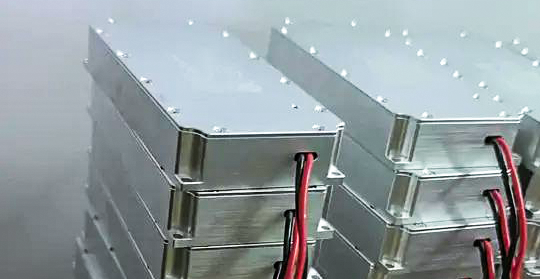
These aren’t portable gadgets; they are sophisticated, high-power RF (Radio Frequency) circuit boards designed to be integrated permanently into a larger security ecosystem. If you’re a systems integrator, a security engineer, or just curious about how facilities keep unauthorized quadcopters out, understanding the anatomy of these modules is essential.
An embedded drone jammer module is a self-contained electronic assembly that generates high-power radio signals on specific frequency bands. Unlike a complete jammer product with a plastic shell, battery, and trigger, the embedded module is an OEM (Original Equipment Manufacturer) component. It requires an external power supply, a cooling solution (heatsink or fan), and a control interface (usually TTL serial or Ethernet) to function.
The primary goal is simple: sever the communication link between the drone and its pilot, or blind its navigation sensors.
The “magic” inside these modules comes down to two engineering components:
Synthesizer/VCO (Voltage-Controlled Oscillator): This generates the precise frequency needed to interfere with drone communications. Common target bands include 2.4 GHz (Wi-Fi/Control), 5.8 GHz (FPV Video), and 1.5 GHz (GPS/GLONASS L1).
High-Power Amplifier (HPA): This takes the small signal from the synthesizer and boosts it to significant wattage—typically between 20W and 100W per channel in embedded modules. Because drones are moving targets at a distance, pure wattage is necessary to overcome the signal strength of the remote controller.
When activated, the module floods the target frequency with white noise or a sweeping tone. The drone’s receiver, which is trying to listen for the pilot’s quiet whisper, is suddenly drowned out by a roaring shout from the jammer module.
Not all jamming is created equal. When selecting an embedded module, integrators must choose between two distinct approaches:
This is the traditional method. The module blasts high-power RF energy across a wide swath of the spectrum (e.g., 2.4 GHz to 2.5 GHz). It’s effective but “dirty.” It works by sheer brute force.
Pros: Effective against almost any drone using that band, including custom DIY builds.
Cons: High collateral interference. It can knock out nearby Wi-Fi routers and Bluetooth devices.
More advanced embedded modules include an SDR (Software-Defined Radio) front-end. Instead of just making noise, these modules listen for a moment, identify the specific drone protocol (e.g., DJI OcuSync, Autel SkyLink), and then generate a tailored, efficient interference signal.
Pros: Lower power consumption, less collateral damage to nearby spectrum users, and harder for the drone to filter out.
Cons: Requires a constantly updated library of drone protocols to remain effective.
A critical sub-component found in high-end embedded modules is the GNSS (Global Navigation Satellite System) manipulator. While a GPS jammer simply blocks the satellite signal (causing the drone to drift or land), a GPS Spoofing Module does something more surgical.
A spoofing module embedded in the system transmits a fake GPS signal that is slightly stronger than the real satellites overhead. It tricks the drone’s flight controller into thinking it is somewhere else.
Result: The drone will attempt to “correct” its position, effectively flying away from the protected area or being steered to a designated safe landing zone without the erratic behavior of a signal loss.
For engineers looking to install these modules, the PCB itself is only half the battle. Two external factors dictate performance:
Antenna Selection: You cannot just screw a rubber duck antenna onto a 50W module. High-power embedded modules require directional panel antennas or sector antennas with high gain (dBi) to focus the energy like a flashlight beam rather than a lightbulb. Mismatched SWR (Standing Wave Ratio) between the module and antenna will fry the power amplifier instantly.
Thermal Management: RF power amplifiers are incredibly inefficient; 60% of the input power turns directly into heat. An embedded module running at 40W requires a robust aluminum heatsink or forced-air cooling. In outdoor NEMA enclosures, this often means a Peltier cooler or heat pipe design.
It is crucial to state that the operation of drone jamming equipment is illegal for private citizens and commercial entities in most countries, including the United States (FCC regulations) and Europe.
These embedded modules are strictly restricted to authorized government agencies, military installations, and law enforcement operating under specific spectrum licenses. They are not for sale to the general public for use. Any article discussing this technology must emphasize that the information is for educational and systems-integration awareness only within the context of legally authorized security infrastructure.
The next generation of embedded drone jammer modules is moving away from omnidirectional “bubble” jamming. The new standard is Direction of Arrival (DOA) integration. These modules are paired with a small phased-array radar antenna. The system detects the drone’s bearing and altitude, then activates a beam-steering jammer module that focuses all RF energy on a narrow 10-degree cone aimed at the drone.
This approach minimizes the electronic footprint, prevents the jamming of friendly communications, and allows for much greater effective range with the same power budget.
The embedded drone jammer module is the unsung hero of the Counter-UAS (C-UAS) world. It transforms a reactive security problem into an automated, electronic shield. While the legal framework surrounding their use remains strict, the technology continues to evolve from brute-force noise generators into intelligent, protocol-aware, and directional RF defense systems. As drones become more autonomous and reliant on 4G/5G cellular links, expect these embedded modules to adapt, targeting new frequency bands and leveraging AI to protect the skies.
86-13920737097
AddNo. 15, Rongyuan Road, Huayuan Industrial Park, Binhai Hi-tech Zone, Tianjin, China.
E-mailjackyjingtj@gmail.com
Copyright @ 2026 BNT PTE. LTD. No:84463
Copyright @ 2026 BNT PTE. LTD.
Copyright @ 2026BNT PTE. LTD.


